Thursday, February 24, 2022

Indie Ink Runs Deep: Kathe Koja and Dark Factory


Every now and then I manage to talk a small press author into showing us a little skin... tattooed skin, that is. I know there are websites and books out there that have been-there-done-that already, but I hadn't seen one with a specific focus on the authors and publishers of the small press community. Whether it's the influence for their book, influenced by their book, or completely unrelated to the book, we get to hear the story behind their indie ink....


~~~~~~~~~~~~~~~~~~~~~~~~~~~~~~~~~~~~~~~~~~~~~~~~~~~~~~~~~~~~~~


Today's ink story comes from Kathe Koja, whose newest novel Dark Factory drops on May 10th!


Indie Ink Runs Deep . . . 

Max Caspar of Dark Factory [and Kathe Koja]


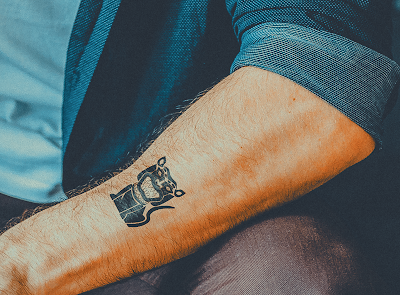
Dark Factory is Kathe Koja’s new immersive novel project from Meerkat Press, online https://darkfactory.club/ and coming this year in print, ebook and audio. And the preorder swag package includes your own Dark Factory tattoo! https://darkfactory.club/kathe-koja-presents-dark-factory/


Max Caspar is the club’s resident philosopher, though he’d reject that title: But Max understands that the image of a thing sometimes is the thing itself, the same way a tattoo can be so much more than just a body decoration. Here’s Max’s interpretation of the Factory tattoos:

I knew Ari wanted to get a tattoo when he asked about mine—it’s an image of Tezcatlipoca, the roaring jaguar god who watches the world in his obsidian mirror, mine is, I mean. Ari said that sounded like a gamer, looking at the universe through a screen; I hadn’t conceptualized it that way before. Ari’s very good at that, turning the mirror around so you see yourself. Other people might see other things in my Tezcat tattoo.

Ari ended up getting a triskelion, three black whorls of the same size, on his wrist. I told him that that image occurs in a lot of different cultures, it represents creation destruction and resurrection, body mind and spirit, and so on. I don’t know what it means to him, except he and Felix—Felix is his partner—got one at the same time, Felix’s is of a minotaur, Ari says. Ari says Felix has other ones too, of flowers. Flowers have their own language, floriography.

Davide—he’s my work partner, a gamer, a games maker—doesn’t have any tattoos, though it seems like he should have plenty: Davide is hyper focused on symbols, and incorporating strong visual meaning into actual, physical life. Our other work partner, Clara, has a quote from Galileo on her arm: the English translation is, “It still moves,” his apocryphal answer to the Inquisition. It’s the motto of Clara’s business, Fantastic Fantoms, too.  

Mila never had tattoos—Mila, she’s a, a friend—and Marfa doesn’t either. Marfa lets her t-shirts do the visual talking for her, all her shirts are neon bright and in your face. Marfa is a journalist, she believes in words, not symbols; but words are only symbols, too.


~~~~~~~~~~~~~~~~~~~~~~~~~~~~~~~~~~~~~~~~~~~~~~~~~


Bios:


Max Caspar: Max Caspar is a reality artist, concentrated on site-dependant, durational installations. He holds an MFA from Kunstfarm. He also writes.  max@darkfactory.club


Kathe Koja: Kathe Koja writes novels and short fiction, and creates and produces immersive performances that cross and combine genres. Her work has won awards, and been optioned for film and performance. kathe@darkfactory.club


Monday, February 21, 2022

Caleb Tankersley Recommends Louise Erdrich


It's been a while since we'd dusted off our Writers Recommend series, dear reader, a fun excerise where we ask writers to, well, you know.. recommend things. Like the books that they've enjoyed. To you. Because who doesn't like being recommended new and interesting books, right?! Think of it as a PSA. Only it's more like an LSA -Literary Service Announcement. 


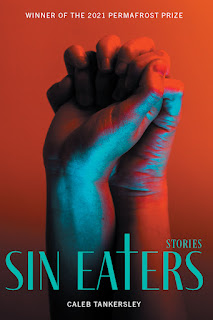
This recommendation comes from Caleb Tankersley. His story collection Sin Eaters won the 2021 Permafrost Book Prize and is published by University of Alaska Press. He is also author of the chapbook Jesus Works the Night Shift. His writing can be found in Carve, The Cimarron Review, Puerto del Sol, Sycamore Review, and other magazines. He is the managing director for Split/Lip Press and lives near Seattle.


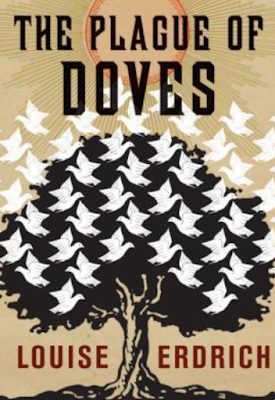
Caleb Tankersley Recommends The Plague of Doves by Louise Erdrich


“A burst of radiance. The flowers fly into the air and scatter in the yard. Another crack so loud we’re right inside of the sound. Billy Peace, sitting on the iron bench like an oracle, is the locus of blue bolts that spark between the iron poles and run along the lantern wires into the trees. Billy, the conductor with his arms raised, draws down the power.”


I’ve given you this line with no context, no surrounding story, no character descriptions. You don’t know Billy Peace, and you don’t know who is witnessing him be struck by lightning. But none of this information is necessary for you to be drawn in by the energy of these lines.


That’s the genius of Louise Erdrich, who is—I don’t mine staking the claim here—the greatest living English-language fiction writer. You could read any of Erdrich’s books to understand how brilliant her work is—some of my favorites include LaRose, Tales of Burning Love, and The Last Report on the Miracles at Little No Horse—but I think Erdrich’s linguistic skill is most on display in The Plague of Doves.


The book features a large host of characters who live around the small town of Pluto, North Dakota. We follow Evelina—a young girl trying to find herself amongst all her family history—as well as several characters in decades past who were involved in a series of horrific crimes and retaliations that still reverberated in the lives of Pluto’s white and Ojibwe citizens today.


I’m an easy cryer. A few violin strings or thinking about Zuko reuniting with Iroh and I’m wiping dust out of my eyes. But it’s fair to say that The Plague of Doves struck me on a whole other emotional level. Louise Erdrich should have a multi-million-dollar sponsorship deal with Kleenex. This isn’t to say the book is melodramatic; far from it. The Plague of Doves is deeply real, deeply genuine, and deeply funny, all of which make its emotional moments strike with a ringing clarity.


But what really sets Louise Erdrich apart as the GOAT and made me a life-long fan is illustrated in the passage above: her language. Each and every sentence is supremely polished and smooth, perfectly crafted. And while the scenery is clear and the movements crisp, Erdrich somehow imbues every line with magic. I don’t mean “magic” in the sense of fantasy or wizards, I mean magic. Possibility. The reader is firmly rooted in the real, tangible world, but Erdrich’s prose lets us know that the rules of this world are malleable. It’s as if the very atoms that make up her environments are vibrating, allowing anything to pass through at any time.


Erdrich’s plots lean into these magical elements in small ways, but it would be a bit simplistic to call The Plague of Doves a magical realist novel. A better description might be that Erdrich herself has a worldview that allows for magic to happen, and she’s happy to share that view in her writing.


And what happened to Billy Peace, the man struck by lightning? I’ll let Erdrich tell you as only she can:


“He is a mound, black and tattered, on all fours. A snuffling creature of darkness burnt blind. We watch as he rises, gathers himself up slowly, pushes down on his thighs with huge hands. Finally, he stands upright. I grab my mother’s fingers, shocked limp. Billy is alive, bigger than before, swollen with unearthly power.”


There’s a brief sample of what you can expect from The Plague of Doves. I’m envious of anyone reading this who gets to arrive at this book for the first time. Go curl up with a copy today (and bring some Kleenex).


~~~~~~~~~~~~~~~~~~~~~~~~~~~~~~~~~~~~~~~~~~~~~~~~


If you feel so inclined, please check out Caleb's forthcoming book: 


Winner of the 2021 Permafrost Prize, Sin Eaters is Caleb Tankersley’s debut story collection.

Magical, heartfelt, and surprisingly funny, Sin Eaters paints a tumultuous picture of religion and repression, while hinting at the love and connection that comes with healing. These powerful stories illuminate the shadowy edges of the American Midwest, featuring aspects of religion, sex and desire, monsters and magic, and humor.

Sin Eaters is a fight for authenticity in a world that is mysterious, muggy, and punctured by violence. This stunning debut full of complex themes will both challenge and delight.

Sin Eaters arrives March 2022. Preorder  your copy now.

Tuesday, February 15, 2022

Where Writers Write: Marc Kristal

 Welcome to another installment of TNBBC's Where Writers Write!


Where Writers Write is a series in which authors showcase their writing spaces using short form essay, photos, and/or video. As a lover of books and all of the hard work that goes into creating them, I thought it would be fun to see where the authors roll up their sleeves and make the magic happen. 


This is Marc Kristal. 

Marc has authored, co-written or contributed to more than forty books, notably Re:Crafted: Interpretations of Craft in Contemporary Architecture and Interiors, Immaterial World: Transparency in Architecture, and The New Old House: Historic and Modern Architecture Combined. His journalism has appeared in numerous publications, including the New York Times, Architectural Digest, Wallpaper, Metropolis, and Dwell. Also a screenwriter, Kristal wrote the 1990 feature Torn Apart, and created the script for Saigon ‘68, which received the 2013 Best Documentary award at the L.A. Shorts Fest and the CINE Special Jury award. He lives in New York. https://marckristal.com/


Where Marc Kristal Writes


When I met my wife, nearly forty years ago, she was living in a prewar studio apartment that she’d rented in Manhattan’s Chelsea district in the mid-1970s. Though it may be hard to imagine today, given the neighborhood’s multimillion-dollar steam-cleaned townhouses, ever-changing cavalcade of theme-y restaurants and, most dismayingly, the conversion of the Chelsea Hotel into ‘luxury condos,’ the area was pretty dicey back then, with Eighth Avenue a random bricolage of gay and dive bars, Cuban diners, and sex shops, and Ninth the turf of the lower west side projects. For these reasons, my wife paid a stabilized rent in the low three figures, for what was, the building’s decrepitude notwithstanding, a pretty nice setup. The main room was ‘sunken’ – i.e. two steps down from the entry/dining area – the windows overlooked a series of well-tended townhouse gardens, and the place was dead-quiet, an especial bonus for someone who, as the saying goes, can hear a fish fart.

            Once we started living together, I began using her place as a writing studio, an arrangement that lasted for about 25 years. Alone, undistracted, at peace, I produced, in that situation, about 80 percent of my life’s work – two dozen screenplays, half as many architecture and design books, hundreds of articles, a play or two and, after a decade of wandering in a creative wilderness, a novel.

            About fifteen years ago, I was evicted. The building was sold, the crocodiles who bought it took everyone to court, and as our actual residence was elsewhere (and despite the fact that I spent six days and several nights a week there and had for decades), we were in violation of the city’s rent-stabilization laws, we would have lost at trial and couldn’t afford a lawyer in any case. It is not an overstatement to say that this constituted the most traumatic loss of my professional life. It was over.

            From there, I migrated six blocks north, to 28th Street, the heart of Chelsea’s Flower District. A charming block: every morning in all weather, the merchants would set out whatever was in season – mums, tulips, impatiens – in pots and buckets along the sidewalk, which made for a challenging walk and an unmixed pleasure for the soul. My twelve-by-twelve-foot room, which looked across an airshaft through uncleanable windows into a sweatshop, shared walls, floor and ceiling with four recording studios, all specializing in rap and hip-hop. I set up a little kitchen, did the breakfast dishes in the men’s room, hung some photos, and laid in a supply of Quies wax earplugs, The Writer’s Best Friend. The rent was double what I’d been paying, still not very much, but you noticed when you wrote the check. I lasted just under a year. I couldn’t deal with the 24/7 thud of the sub-woofers, above, beside, beneath.


By then, my wife and I were living in another prewar apartment, undistinguished but for a rather startling amenity: a walk-in closet measuring five by nine feet. The drawbacks of working in a closet (apart from the inevitable ‘jokes’ about being a closet writer, coming out of the closet, etc.) are 1) no windows, 2) no ventilation, 3) claustrophobia, 4) NOT ENOUGH ROOM FOR ANYTHING, 5) impossible to keep clean, 6) that’s where the 24-packs of toilet paper are stored.

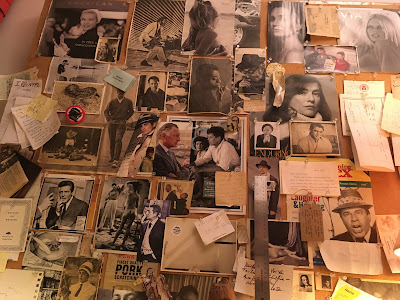
            And yet. Once I put up a wall-size corkboard and pinned up pictures of my pals (Alain Delon, William Kentridge, Patricia Highsmith, Brigitte Bardot, and others), I felt like I’d taken ownership of the space. Two walls are covered in bookshelves, so if I dry up and want to refresh myself by dipping into my betters, they’re all within half an arm’s reach. The commute could not be shorter, though you have to make sure to get out a few times a day or risk turning into Miss Havisham or Howard Hughes (without the money). It’s cheap. It’s  cozy. And as I am opposite the bathroom, it might be said that I have a water view.


            This is not how I expected to end my creative days (and hopefully it won’t be) and given that things are so constrained, I am less productive. But I still show up for work every morning, and as every writer knows, once you get down to it, the world falls away. I’m in a closet, but I could be anywhere.

            There are a number of personal items in here keeping me company. Perhaps the most important is a postcard I purchased a few years ago, in the gift shop at the Anne Frank House in Amsterdam. It is a photo, by Arnold Newman, of Otto Frank, standing in the attic of the family hiding place – the Secret Annex – on 3 May 1960. It had been Frank’s decision to remain in hiding in the city rather than flee, and he was the only member of his family to survive the war. Which meant that, as he died in 1980, at 91, Frank had 35 years in which to ponder the consequences of his choice.


            The postcard sits directly in front of me on the desk, unavoidable – a constant reminder of how fortunate I am, to have a place of my own to work, to do what I love, to have had it so good, so easy, for nearly seventy years. A constant reminder to, as the saying goes, count my blessings. Things could be worse.


~~~~~~~~~~~~~~~~~~~~~~~~~~~~~~~~~~~~~~~~~~~~~~~~~~~~~~~~~~~~~~~~~~


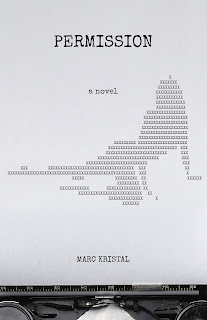
Set in 1990s Los Angeles, Permission tells the story of a screenwriter on the brink of success, derailed by a destructive marriage that drives him into a breakdown. Medicating his condition with a bottomless plunge into prostitutes and cocaine (his unlikely vehicles for self-analysis and personal revelation), he uses what he learns – and the new relationship he finds in this underworld – to come to terms with his nature, and to change his life.
 
Comic and horrific, shockingly explicit yet tender and lyrical, Marc Kristal's uncompromising, unforgettable novel is about the ways in which we create identities that let us overcome and hide from our fears, what happens when those selves crash into their limits – and how the worst sort of chaos can lead, in the end, to the best outcome.


https://www.amazon.com/Permission-Marc-Kristal/dp/1639882022/


Tuesday, February 1, 2022

Top Five Strangest Films Adapted from Literature


Top Five Strangest Films Adapted from Literature
Guest post by Madeleine Swann


There were so many unusual or artistic films adapted from books that I could have included, like Kwaidan (so beautiful), Mishima: A Life in Four Chapters (again, beautiful), Call of Cthulhu (love to see modern silent films) and Viy (Gogol!). In the end, however, I can only choose five, so I picked the absolute strangest, and my absolute favourite, films adapted from literature.


The Fall of the House of Usher (1928, James Sibley Watson and Melville Webber)

https://youtu.be/mxjCWleWXf4

At least two film versions of Edgar Allen Poe's short story were released in 1928; Jean Epstein's beautiful, dreamy version co-adapted with Luis Buñuel (who quit due to creative differences) and this short version by French Impressionists Watson and Webber. 

 It's unlikely the audience would have had a clue what was happening unless they were familiar with the source, but that's not terribly important as it’s more about a feeling and the characters’ subconscious and imagination. It’s strange, pretty and very surreal. The camera lurches uncomfortably and dreamlike shadows drift across the screen, culminating in a barrage of mind-whirling camera trickery. Also, you have to admire Madeline's fabulous outfit. 

Another, more modern, adaptation worth a watch is The Bloodhound, which is very understated while also addressing the character’s subliminal fears.


Zoo (2005, various)

 https://youtu.be/HkFYQ-etkNI

Otsuichi (pen name of Hirotaka Adachi) adapted the script, made of five segments, from his own short stories. Each is an unpredictable curio, with even the trope of girls locked into rooms by a murderer taking an unusual angle. One of my favourite segments is a boy struggling to cope with his seemingly dead parents, both insisting they lived while the other died in a car crash, both apparently unable to see the other. Are they both ghosts? Is one still alive? Is a dimension shift happening? It’s a bit of a shame (in my opinion) that it explains too much at the end, but the explanation itself is slightly barmy which saves it.


Wisconsin Death Trip (1999, James Marsh)

 https://youtu.be/ZO-zz7-IH4c

One of the most hauntingly odd films I’ve seen adapted from an equally strange book released in the seventies. The book contains photographs and newspaper articles of sad and strange happenings in Wisconsin during the 1800s, when the endless snowy months drove its inhabitants to madness and despair.

 The film includes narration of articles over re-enactments, with the entries to the insane asylum whispered eerily. Some of the stories are quirkily uplifting such as the opera singer, no longer in her prime, who moved to Wisconsin from the big city and gave a denture clacking concert.

 Mixed with these black and white stories are scenes of modern Wisconsin in colour with locals discussing their home state. While these are interesting, I do feel they remove the viewer from the immediacy of the hard Victorian winters.


Hansel and Gretel (2007, Pil-sung Yim)

 https://youtu.be/nlfnhVsbyeQ

In this version of the classic fairy tale, with strong elements of It’s a Good Life by Jerome Bixby, the children are the creepy ones. Eun-soo just wants to visit his sick mother and get home to his pregnant girlfriend but crashes his car by a forest, where a girl leads him to a magical looking house populated by three children and their parents – or at least that’s how it seems.

 It’s visually wonderful, filled with rainbow cakes, pagan symbols, bright colours and old toys evoking those unsettling Edwardian Christmas cards. The mystery deepens as each of Eun-soo’s escape attempts fail while the children become increasingly threatening and, I said it, annoying. However, in the end, you can’t help but feel sorry for (almost) everyone involved.


Spark of Being (2010, Bill Morrison)

 https://youtu.be/5oXyfVVHcVU

Bill Morrison’s films give me the uneasy feeling that I’m watching the videotape in Ringu, particularly Decasia. This one strings the archival footage that Bill is known for together to loosely recreate the story of Mary Shelley’s Frankenstein. The different story segments are announced by chapter headings and we’re often placed in the “monster’s” POV as he watches the family go about their business on the farm or endures suspicious stares from city dwellers.

 As with the House of Usher it helps if you know the story because it’s completely without dialogue and intertitles. However, it's such a loosey goosey adaptation, that the main intrigue comes from the historical value of the archival footage and the trippy scenes you can zone out to. I think my favourite bit is the petri dishes and bacteria of Frankenstein’s laboratory (patched rhythmically together from educational films) while Dave Douglas’ jazz score goes absolutely nuts, very cool.


~~~~~~~~~~~~~~~~~~~~~~~~~~~~~~~~~~~~~~~~~~~~~~~~~~~~


Madeleine Swann's collection, The Sharp End of the Rainbow, was published by Heads Dance Press and her novella, The Vine That Ate The Starlet, was released by Filthy Loot. 

Her collection, Fortune Box (Eraserhead Press), was nominated for a Wonderland Award. Her short stories have appeared in various anthologies and podcasts including Splatterpunk Award nominated The New Flesh: A David Cronenberg Tribute.

 http://madeleineswann.com/   |    https://headsdance.press/     | Twitter

Amazon links for The Sharp End of the Rainbow: US   |    UK


Monday, January 24, 2022

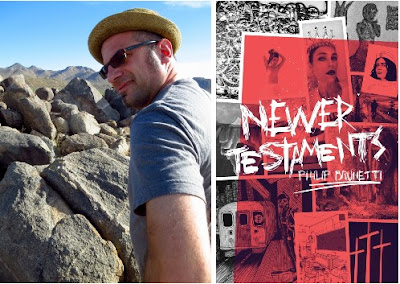
Audio Series: Newer Testaments


Our audio series "The Authors Read. We Listen."  was originally hatched in a NYC club during BEA back in 2012. It's a fun little series, where authors record themselves reading an excerpt from their own novels, in their own voices, the way their stories were meant to be heard.


Today, Philip Brunetti will be reading an excerpt from 
Newer Testaments, his first published novel. 
Fiction writer, poet, antipoet, gentle quasi-misanthrope, librarian, Philip has been writing fiction and poetry since his early 20s. His innovative work has been published in various online or paper literary journals including Cobalt Weekly, Swamp Ape Review, The Boiler, and Identity Theory. His debut novel, Newer Testaments (Atmosphere Press, 2020) is described in the Independent Book Review as 'an innovative existential novel told through hallucinatory poetics.' Via his librarianship at the Brooklyn Public Library, Brunetti also runs the Gravesend Writers Group, a monthly writers discussion group. Find out more about Philip at philipbrunetti.com and bookshop.org/shop/PhilipBrunetti


Click on the soundcloud bar to hear Phillip read from Newer Testaments


What it's about:

"In the tradition of Denis Johnson's Jesus' Son, Brunetti's wondrously wandering writing is taut and cryptic, vivid and hallucinatory, rendering an irony-laden, aberrant odyssey for his impossibly likable protagonist." -Franco D'Alessandro, playwright & poet, Roman Nights, Stranger Love, and Everything Is Something Else

Ever get the feeling that your life is caught up in some kaleidoscopic Jungian dream and that you weren't exactly dying but still everything you'd ever been is flashing before your eyes-and then when you wake from this dissolutive dream, your reality remains altered and time has become concurrent and characters from thirty-plus years ago walk into your life again, if ambiguously, and press you on matters of a sacred-profane written text that you never completed?

Heretical and outrageous, ironic and absurd, Newer Testaments scores a hit in the heart of where the existential meets the fated, and the writer's task becomes both revelatory and abject. Into this formidable personal struggle a cast of untoward and/or diaphanous characters rotate including The Jesus Girl, John Baptist, Macbeth, King Kisko, The Tree Girl, Nurse Mother, a glass satyr and a French New Wave Mother. Has the nameless narrator lost his mercurial mind, or is this a subconscious-shadow-world sojourn he's been practicing for all his life?-the keys to the kingdom of being.


Thursday, January 20, 2022

Page 69: Ballad of Jasmine Wills

 Disclaimer: The Page 69 Test is not mine. It has been around since 2007, asking authors to compare page 69 against the meat of the actual story it is a part of. I loved the whole idea of it and so I'm stealing it specifically to showcase small press titles - novels, novellas, short story collections, the works! So until the founder of The Page 69 Test calls a cease and desist, let's do this thing....


In this installment of Page 69, 
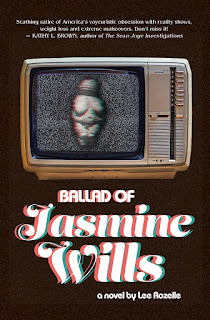
we put Lee Rozelle's Ballad of Jasmine Wills to the test. 


Set up page 69 for us. What are we about to read?


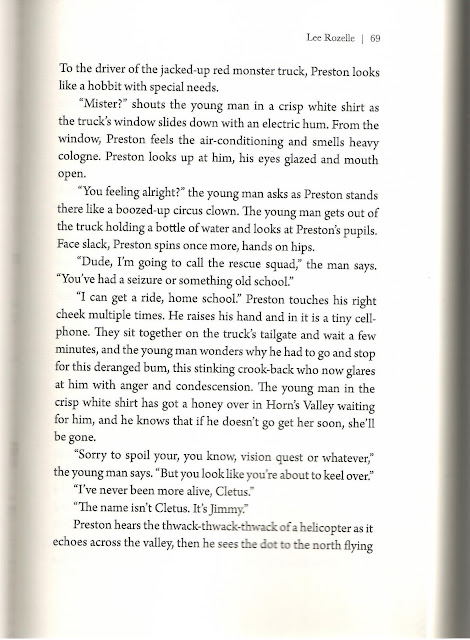
Page 69 starts with the questionable phrase, “hobbit with special needs.” Not an auspicious start, I know. But keep in mind that description is coming from a dubious character in his own right. On this page, a creepy media executive named Preston Price is staggering around in the middle of a national forest in a state of dehydration and fatigue on a cockeyed vision quest. A young man in a monster truck stops to help, and Preston behaves like a jerk calling the young man “Cletus.”


What is your book about?


At its twisted little turnip-shaped heart, this book is about body positivity. It explores why we sometimes feel bad about our shapes and sizes, and how media is so good at exploiting people who have been trained not to like their bodies. Part of the idea for this book came from watching a commercial for the reality TV show Fear Factor, where people were stuffing worms into their mouths for media attention. I thought, “Why would those people eat worms for media fame?” Then I thought, “What would I eat for media fame?” And then I started to imagine the people who think up and produce shows like Fear Factor and Naked and Afraid. What about their inner lives?


Do you think this page gives our readers an accurate sense of what the book is about? Does it align itself with the book’s overall theme?


I would say that page 69 of Ballad of Jasmine Wills gives us clues about our antagonist, Preston Price. It doesn’t introduce the reader to Jasmine, the full-bodied firebrand at the center of the action. It’s the tension between Preston and Jasmine that brings this novel to life.


~~~~~~~~~~~~~~~~~~~~~~~~~~~~~~~~~~~~~~~~~~~~~

PAGE 69

BALLAD OF JASMINE WILLS


~~~~~~~~~~~~~~~~~~~~~~~~~~~~~~~~~~~~~~~~~~~~~~~~~~~~


Lee Rozelle’s debut novel Ballad of Jasmine Wills released this past December with Montag Press. Lee is the author of nonfiction books Zombiescapes & Phantom Zones and Ecosublime. He has published short stories in Cosmic Horror MonthlyHellBound Books‘ Anthology of BizarroShadowy Natures by Dark Ink Books, If I Die Before I Wake Volume 3, and the Scare You to Sleep podcast. Learn more on his website.


Monday, January 17, 2022

Top Five: Benji Hughes Songs


Five Benji Hughes Songs from L Extreme: JL Civi


L Extreme is a song-by-song novelization of the cult classic double album A Love Extreme by musician Benji Hughes, an artist Vulture once called “the best songwriter you’ve never heard of.” The book serves as a wild tribute to the music and the muse in the spirit of Being John Malkovich crossed with Yellow Submarine via the 33 1/3 music criticism series.


I’m frequently asked a) How does writing a novel based on an album work? and b) Do you need to be familiar with the music to understand the story? This TNBBC top five list seemed like a good place to tackle both questions with examples.


The twenty-five track album served as a skeleton outline to build around, split into four sections mirroring the sides of two vinyl records. Names/places/situations were plucked from the entire Benji Hughes catalogue to populate the world of the story as needed. If you approach the book with an “anything goes” mentality typical of bizarro fiction, familiarity with A Love Extreme the album isn’t strictly necessary—but it will help make sense of (and maybe even spoil) some of the abrupt turns the plot takes.


That said, we’re talking about my favorite album of all time—why else would I write a book about it? So I definitely recommend listening to A Love Extreme whether or not you have any intention of reading the companion novel. The music is that good. J


Without further ado, here are five stellar Benji Hughes songs with a little taste of how they became part of the soundtrack to L Extreme.


1) The Mummy

https://www.youtube.com/watch?v=2IVc6KRiqUo


It all started with this charmingly nonsensical indie rocker that name drops classic movie monsters, a Pavement DVD, and Joe Walsh of The Eagles. For years I’ve written short stories based on songs for fun to amuse myself or my friends. Long before attempting this novel was on my radar, I took a stab at a story featuring Frankenstein, Dracula, and the Mummy as roommates in a band with a Monkees style living situation. Monsters felt too obvious, so I shifted to a guy named Frank (who may or may not be Victor’s creation) and another named Count (who may or may not be an adult version of the Sesame Street muppet vampire). For unknown reasons I randomly replaced the Mummy with a fictionalized Benji Hughes, and half of the core L Extreme cast were born. That original story is NOT the chapter that ended up in the final book, but it was the spark that set this album oriented fan fiction project in motion.


2) Neighbor Down the Hall

https://www.youtube.com/watch?v=LStHRFzhH2Y


A chill anecdotal story song chronicling the downsides of big city living, this track fleshed out quite a bit of the L Extreme framework—especially Side A. The novel’s primary setting is a small apartment on an okay side of town. Benji & C perpetually play music on a jambox and worry about noise complaints. Neighborhood watch and Halloween become set pieces moving the plot forward in bizarre ways, taking cues from Benji’s lyrics. Halloween conveniently ties back to Frankenstein & Dracula from the aforementioned Mummy tune, drawing dotted lines between two songs/chapters in need of connecting by an author looking for patterns.


3) Do You Think They Would Tell You?

https://www.youtube.com/watch?v=7KWB25W38aY


My favorite Benji Hughes song, and one that unexpectedly became the linchpin of the novel. “A little woman lives in your brain….She wants to meet the man in your heart….She’s over all the ones in your feet.” This fantastical fairytale love song inspired the bulk of Side B, subtitled “The Ballad of Heartman & Songstress.” Some readers have suggested Side B is a more accessible entry point to LX than Side A. It’s a mostly standalone flashback (outside of a framing device intro/outro) that chronologically happens first. If I wasn’t so invested in the stunt of following the album order end to end I may have been inclined to lead with this part also, so I endorse it as a valid alternate reading experience. But oh, what a song.


4) Cornfields

https://www.youtube.com/watch?v=-v6aV_QrwgA


Five short instrumental jams are included among the twenty-five tracks on A Love Extreme. Without lyrics to mine for ideas, I took inspiration from the titles and musical composition, landing on an idea to unify each one into surreal fever dream chapters that feel jarring in the moment but (hopefully) make sense by the end. The word “cornfields” always reminds me of an old Quantum Leap episode where Sam Beckett leaps into himself as a teenager and twice runs through a field of corn, which paired nicely with the heavy surf rock vibe of the song. (The video is a zany QL parody book trailer  / music video I hacked together to illustrate where my brain went here. Having knowledge of the TV show definitely helps you appreciate this chapter.)


5) I Went with Some Friends to See the Flaming Lips

https://www.youtube.com/watch?v=bIv0gp3gEo4


Another story song, this time about a real-life road trip to see a concert at the Orange Peel in Asheville, NC on 4/17/03. Benji Hughes often calls it “a play by play” in interviews. I kept the spirit of the subject matter by having the gang watch the Flaming Lips documentary The Fearless Freaks (on DVD—tying back to the Pavement film sung about in “The Mummy”), but plot-wise honed in on a seemingly throwaway line as a crucial turning point and the namesake for two key characters: “Jessica and L dropped by…”


Since I’m supposed to limit this to only five songs (my true top list would span multiple albums), I don’t have room to get into how the lyric “I want to be in your book—the front page of your life” subconsciously pushed me deeper into this project or how mis-hearing another lyric as “I’m standing in a cape on your lawn” inspired a Say Anything style segment with the omnipresent jambox held high over Benji’s head outside L’s window. Full chapter by chapter, song by song commentary is available on my blog if you’re intrigued and want to learn more.


I’m forever in debt to Benji Hughes for entertaining this unsolicited, out of the blue project and ultimately giving his permission to release it. (He even provided the cover art and wrote an afterword!) If you hate the book, blame me. If you enjoy it, credit the muse and his masterwork for the inspiration. Either way, check out his music. I hope you dig it as much as I do.


A Love Extreme — an album by Benji Hughes


L Extreme — a novel by JL Civi


Special thanks to Lori for inviting me to contribute to the TNBBC Blog author series!


 ~~~~~~~~~~~~~~~~~~~~~~~~~~~~~~~~


JL Civi is a music aficionado and time travel geek. Both turn up frequently in his work—often in the same stories—even when he starts off writing about something else. L Extreme is his second novel, following the rock and roll time travel tale Timely Persuasion and the serialized juror stories from the work in progress Duty Calls series. Originally from New England, he currently lives in Texas with his wife and dogs. He hates talking about himself, even in the third person. Why are you reading this bio when you could be reading one of his books? Learn more at www.JLCivi.com


Saturday, January 15, 2022

Indie Spotlight: Itoro Bassey’s Faith

 Welcome to our Indie Spotlight series. In which TNBBC gives small press authors the floor to shed some light on their writing process, publishing experiences, or whatever else they'd like to share with you, the readers!


Today, we are shining the spotlight on 
Itoro Bassey’s, Faith


Itoro speaks in-depth about her debut novel, Faith, a work of fiction following the protagonist Arit Essien, a withdrawn kid from New England trying to fit into her lily-white landscape. It’s a poignant conversation between several generations of women grappling with expectation, fragmentation, and a desire for independence.


The book is out on January 15th. Order your copy here.  Read an excerpt here.


Why Faith? Of all things to write…


I wasn’t expecting to write this particular novel. But I think it’s important that this is the first book that was birthed. I was hoping that this book would have a more clear narrative structure, and would be more linear, easier to digest, and instead, I wrote a book where the characters are not so clear cut, there’s not a clear line, and there are so many jumps in time. There are even conversations between the living and the dead…so…to answer your question, I wrote this book because I needed to write it. It’s the book that popped out over years of putting stories together and trying to find a way to talk about identity, relationships, migration, and spirituality within an African context. So I wrote Faith, simply because I felt it needed to be out in the world, and that it had merit, and I’m hoping that someone, somewhere will relate to the book. I think people will…the structure and content in the book actually sums up so many experiences of immigrants, mothers and daughters, and those who have navigated broken relationships and systems.


Is Faith based on your life?


Yes and no. It’s a work of fiction for sure, but I think real life is such a great playground for writing, especially writing this kind of story. I gave the story the bones of my real life. It’s a fact I grew up in New England and have traveled to different places. I also have a similar narrative to many Nigerian-Americans and children of immigrants trying to navigate their parents’ expectations while defining their own. I also know that so many of us navigate complicated family dynamics, where we love our families but have a lot of tension existing inside them. I actually think this is one of the most defining attributes of our generation, the first-gens and immigrants coming to a new country, and so on…that idea that one can leave, must leave, to find a life. 


And why did you choose this title?


Well…I’m not the best with titles…in general. But when I really sat down and thought, What’s at the heart of this book, I mean, what’s it about…it’s about faith. Finding your faith, going against the faith (talking in a religious sense) you’ve inherited, and learning how to trust yourself, how to trust that the life you’ve been given can become what you make it.


To end this chat, when you’re not writing epic novels, what do you do for fun!?


I like to eat. I like to eat a lot.


~~~~~~~~~~~~~~~~~~~~~~~~~~~~~~~~~~~~~~~~~~


Itoro Bassey is a Nigerian-American writer, journalist, and storyteller. She was born in Houston, Texas, and raised in New England. She has received writing fellowships at the Vermont Studio Center, the San Francisco Writers Grotto, and The Edward Albee Foundation, among others. Her short story, To the Children Growing Up in the Aftermath of Their Parents’ War, won third place in the Glimmer Train Short Fiction Award. Some of her popular pieces of writing are Running, Anti-Blackness and the African Immigrant, and A Visitor in My Homelands. Currently, she works as a correspondent and producer at Arise TV.