Tuesday, June 6, 2017

Indie Ink Runs Deep: Erika T. Wurth


Every now and then I manage to talk a small press author into showing us a little skin... tattooed skin, that is. I know there are websites and books out there that have been-there-done-that already, but I hadn't seen one with a specific focus on the authors and publishers of the small press community. Whether it's the influence for their book, influenced by their book, or completely unrelated to the book, we get to hear the story behind their indie ink....


~~~~~~~~~~~~~~~~~~~~~~~~~~~~~~~~~~~~~~~~~~~~~~~~~~~~~~~~~~~~~~


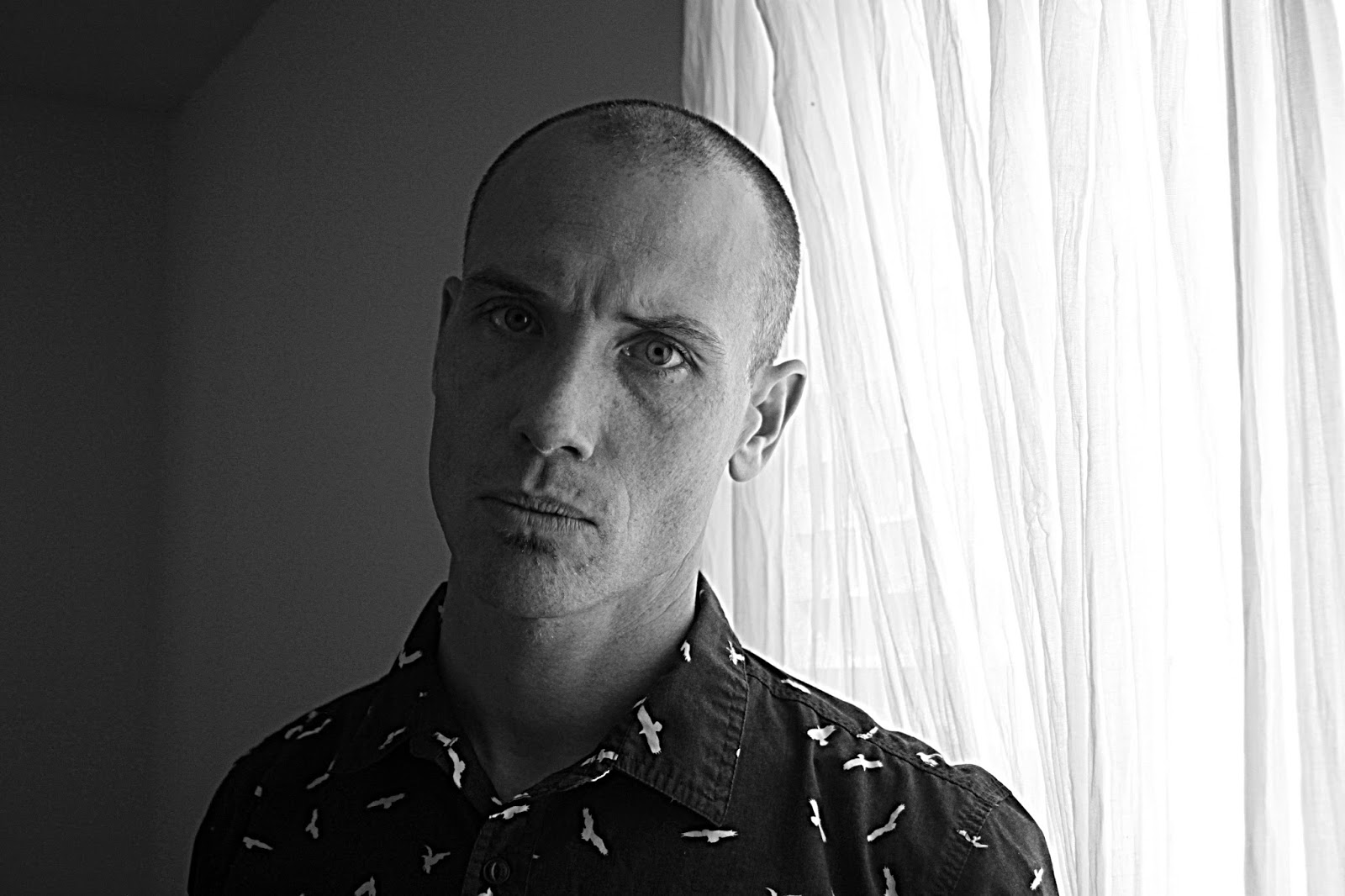
Today's ink story comes from Erika T. Wurth, author of the very-soon-to-be-released collection of interconnected stories Buckskin Cocaine. 


My grandmother had what was essentially an arranged marriage at 14. Though Native Americans did do this traditionally, traditionally it was done by someone just trying to make sure you weren’t marrying a cousin. But as things became bad for Indians, and Natives feared for survival, those arranged marriages became more compulsory, and my great-grandmother, who was raising her, made sure she was alone enough with her much older beau to guarantee a pregnancy. He was a drinker, and when she was almost due he walked up the porch steps and kicked her in her pregnant stomach. She left him, and the baby survived, though the Catholic Church excommunicated her. Ironic, considering that that was also something that for Natives was compulsory (Catholic schools) and had been for my grandmother though she went through the relatively milder day schools for urban Indians, instead of the nightmarish boarding schools that Indian children were forced to attend. What’s always killed me about this is that my grandmother’s grandmother had had an arranged marriage, and she had hated her much much older husband so much, that she had stripped a bullet, melted it, and poured into his ear while he was sleeping, which killed him. She had also owned an Indian whorehouse (which is where her son – who was Apache and Chickasaw, met his wife, a well-off Cherokee runaway who had ended up working there). My grandmother went on to marry my mother’s father, and though I think there were many beautiful parts to her life, she was always sad. She had been a jazz singer, and had had a contract to go to New York before her arranged marriage. But she couldn’t afford to get there. When I was 6, she raised a gun to her temple, and when her husband tried to stop her, one way or another, that gun went off and killed her. When it came time to write my novel Crazy Horse’s Girlfriend, about a 16 year old girl from a small town who rants and raves about druggies and early pregnancy – but who is a drug dealer who gets pregnant – there was only one name I ever considered for her. And a few years later, I knew that her named belonged on my body, forever. 


~~~~~~~~~~~~~~~~~~~~~~~~~~~~~~~~~~~~~~~~~~~~~~~~~~~~~~~~~~~~~~~~~

Erika T. Wurth’s published works include a novel, Crazy Horse’s Girlfriend and two collections of poetry, Indian Trains and One Thousand Horses Out to Sea. Her collection of short stories, Buckskin Cocaine is forthcoming. A writer of both fiction and poetry, she teaches creative writing at Western Illinois University and has been a guest writer at the Institute of American Indian Arts. Her work has appeared or is forthcoming in numerous journals including Boulevard, Drunken Boat, The Writer’s Chronicle and South Dakota Review. She is represented by Peter Steinberg. She is Apache/Chickasaw/Cherokee and was raised outside of Denver.

Monday, June 5, 2017

Bronwyn Reviews: The Meursault Investigation

Translated from the French by John Cullen
Pages: 
Publisher: Other Press
Released: 2015


Reviewed by Bronwyn Mauldin


Even if you’ve never read Albert Camus’ The Stranger, you probably have an opinion about it. It’s one of the great works of the Western canon, the one that was many people’s first introduction to existentialism. Perhaps you even know its famous opening line:

Maman died today. Or yesterday maybe, I don’t know.  
(translation by Matthew Ward)

In The Meursault Investigation, Algerian journalist Kamel Daoud has taken on the sacred cow that is The Stranger, exploring the life of its murder victim, an unnamed Arab. By giving this man a name and a life, Daoud demands that we look imperialism in the eye and see it for what it is, see its lingering effects in the life of one rather ordinary Algerian man. This book is a good story and it is also metaphor, as was Camus’.

The narrator is Harun, younger brother of the man Meursault killed. Harun is an old man by the time of Daoud’s novel, and he tells his story to an unnamed stranger in a bar. They drink cheap wine in a bar in Oran as Harun tells his family’s tale and finally gives the victim his name: Musa.

You can turn that story in all directions, it doesn’t hold up. It’s the story of a crime, but the Arab isn’t even killed in it – well, he is killed, but barely, delicately, with the fingertips, as it were. He’s the second most important character in the book, but he has no name, no face, no words. Does that make any sense to you, educated man that you are?

Daoud brings Musa to life, and makes visible a family tragedy, ripple effects of two crimes: the murder of a man and the refusal to give him a name. Without a name or a body, Musa’s mother is never able to secure a pension. Bitter and impoverished, she searches everywhere for her son, then later for the man who killed him. Harun eventually studies French in order to read to his mother two brief newspaper clippings about the murder that she carries every day close to her heart.

In both novels, punishment is not about the crime, but about societal norms. Meursault is convicted not of murdering an unnamed Arab but of being indifferent to his mother’s death. When Harun finally metes out his own mother’s rough justice, he is not exonerated but he is set free because Algeria has just won its independence from France in a brutal war.

At points, The Meursault Investigation tightly parallels The Stranger in structure, plot, and language. Daoud, it seems, is testing us: Do we read the same events differently if the person telling them is named Harun and not Meursault? How do we imagine a pretty, independent young woman named Meriem compares to a pretty, independent young woman named Marie? Is standing up to the pieties of an imam the same as standing up to those of a priest?


But Harun is not an Algerian version of Meursault. Where Meursault is ambivalent, Harun is angry. Where Meaursault is passive and blindly honest, Harun is self-aware and working hard to prove his case. Meursault’s mother may be dead from her very first appearance, but Harun’s is eternally alive, eternally searching for her son Musa. 


Bronwyn Mauldin is the author of the novel Love Songs of the Revolution. She won The Coffin Factory magazine’s 2012 very short story award, and her Mauldin’s work has appeared in the Akashic Books web series, Mondays Are Murder, and at Necessary Fiction, CellStories, The Battered Suitcase, Blithe House Quarterly, Clamor magazine and From ACT-UP to the WTO. She is a researcher with the Los Angeles County Arts Commission, and she is creator of GuerrillaReads, the online video literary magazine.

Thursday, June 1, 2017

Book Giveaway: Borne

Since July 2010, TNBBC has been bringing authors and readers together every month to get behind the book! This unique experience wouldn't be possible without the generous donations of the authors and publishers involved.


It's the beginning of a new month and you know what that means..

Time to give away our July Author/Reader Discussion novel!


We will be reading and discussing Borne
with author Jeff Vandermeer. 


Jeff's publisher MCD/FSG are making 10 hard cover copies available for US Residents 
(sorry, International folks!)


We're especially excited to have Jeff back as a guest for our #AuthoReadeR discussion!!!


If you haven't been privvy to all the buzz, here's what it's about: 

"Am I a person?" Borne asked me.
"Yes, you are a person," I told him. "But like a person, you can be a weapon, too." In Borne, a young woman named Rachel survives as a scavenger in a ruined city half destroyed by drought and conflict. The city is dangerous, littered with discarded experiments from the Company—a biotech firm now derelict—and punished by the unpredictable predations of a giant bear. Rachel ekes out an existence in the shelter of a run-down sanctuary she shares with her partner, Wick, who deals his own homegrown psychoactive biotech.
One day, Rachel finds Borne during a scavenging mission and takes him home. Borne as salvage is little more than a green lump—plant or animal?—but exudes a strange charisma. Borne reminds Rachel of the marine life from the island nation of her birth, now lost to rising seas. There is an attachment she resents: in this world any weakness can kill you. Yet, against her instincts—and definitely against Wick’s wishes—Rachel keeps Borne. She cannot help herself. Borne, learning to speak, learning about the world, is fun to be with, and in a world so broken that innocence is a precious thing. For Borne makes Rachel see beauty in the desolation around her. She begins to feel a protectiveness she can ill afford. 
"He was born, but I had borne him."
But as Borne grows, he begins to threaten the balance of power in the city and to put the security of her sanctuary with Wick at risk. For the Company, it seems, may not be truly dead, and new enemies are creeping in. What Borne will lay bare to Rachel as he changes is how precarious her existence has been, and how dependent on subterfuge and secrets. In the aftermath, nothing may ever be the same. 

~~~~~~~~~~~~~~~~~~~~~~~~~~~~~~~~~~~~~~~~~~~~~~~~~~~~~


This giveaway will run through June 9th.
Winners will be announced here and via email on June 10th.


~~~~~~~~~~~~~~~~~~~~~~~~~~~~~~~~~~~~~~~~~~~~~~~~~~~~~~


Here's how to enter:

1 - Leave a comment here or in the giveaway thread over at TNBBC on goodreads. (Remember, you must be a resident of the US to request the signed paperback.)


2 - State that you agree to participate in the group read book discussion that will run from July 24th through July 30th. Jeff has agreed to participate in the discussion and will be available to answer any questions you may have for him. 


 3 - Your comment must have a way to contact you (email is preferred).


ONLY COMMENT ONCE. MULTIPLE COMMENTS DO NOT GAIN YOU ADDITIONAL CHANCES TO WIN.


 *If you are chosen as a winner, by accepting the copy you are agreeing to read the book and join the group discussion at TNBBC on Goodreads (the thread for the discussion will be emailed to you before the discussion begins). 


GOOD LUCK!

Wednesday, May 17, 2017

Indie Ink Runs Deep: Roy Pickering


Every now and then I manage to talk a small press author into showing us a little skin... tattooed skin, that is. I know there are websites and books out there that have been-there-done-that already, but I hadn't seen one with a specific focus on the authors and publishers of the small press community. Whether it's the influence for their book, influenced by their book, or completely unrelated to the book, we get to hear the story behind their indie ink....


~~~~~~~~~~~~~~~~~~~~~~~~~~~~~~~~~~~~~~~~~~~~~~~~~~~~~~~~~~~~~~


Today's ink story comes from Roy Pickering, author of Patches of Grey, Feeding the Squirrels, and most recently, Matters of Convenience. 


I got my tattoos before it became such a trendy rite of passage to mark one's flesh. In fact, tattoo parlors were conducting illegal business in New York City at the time. Within a year or two afterward that had changed, and suddenly you could get tatted virtually everywhere without it being a crime or earning so much as a raised eyebrow. But it was at the tail end of the era of tattoos being risque when I went to a parlor learned about from the sister of a frequent customer. It was upstairs from the legendary and no longer with us CBGB.

The first one I got was a skull in flames pierced by a dagger. It didn't symbolize anything for me, I just thought it looked bad ass. Still do. After awhile it seemed strange to have a single image permanently needled on to my body that was so devilish in nature. I was no choir boy but felt  misrepresented by my ink. So I went back to the parlor and asked for something with the opposite vibe, something angelic. "How about an angel?", the artist asked. Why hadn't I thought of that? 

After that day I felt balanced, branded by the evil we are all capable of as well as the good that resides in our hearts. They are reminders when I commit characters to the page hat oversimplification makes for bad writing. Rather than one dimensional saints and equally strait jacketed sinners, I strive for realism. This means acknowledging that good people sometimes do bad things, and bad people can possess noble qualities while making self serving decisions at the expense of others. My tattoos represent the proverbial devil whispering into one ear while a cherub advises me in the other to take an alternate course. Sometimes it can be difficult to tell which voice is which. 


~~~~~~~~~~~~~~~~~~~~~~~~~~~~~~~~~~~~~~~~~~~~~~~~~~~~~~~~~~~~~~~


Roy Pickering was born on the idyllic island of St. Thomas and currently resides in New Jersey with his wife and daughter. His debut novel "Patches of Grey" earned a B.R.A.G Medallion Award. His novella "Feeding the Squirrels" is published by SynergEbooks in electronic format. His second novel "Matters of Convenience" was published in November 2016. Anthologies that house Roy's fiction include Proverbs for the People, Role Call, The Game: Short Stories About the Life, Prose to be Read Aloud and Independent Author Index Short Story Compilation. He is currently working on a series of children's books being illustrated by his wife.

Tuesday, May 16, 2017

Page 69: West Virginia

Disclaimer: The Page 69 Test is not mine. It has been around since 2007, asking authors to compare page 69 against the meat of the actual story it is a part of. I loved the whole idea of it and so I'm stealing it specifically to showcase small press titles - novels, novellas, short story collections, the works! So until the founder of The Page 69 Test calls a cease and desist, let's do this thing....


In this installment of Page 69, 
We put Joe Halstead's West Virginia to the test.


Set up page 69 for us (what are we about to read):

Page 69 is one of my favorite sections of the book. Jamie Paddock returns to West Virginia to investigate the suicide of his father in his own blundering and discursive way. He ends up having dinner with some family that he hasn't seen for the better part of a decade. They all have brain-related illnesses and they're sad and regressive and think Wendy's is a nice restaurant, but Jamie's had a sick and twisted longing for this melancholy the entire time he's been in New York City, so he feels like he's finally home again.


What’s the book about?

West Virginia is about a twenty-something writer who revisits the seamy underside of Appalachia when he returns to his holler to investigate what led his father to suicide, finding parochial prejudices, strange sexual tensions, and family skeletons.


Do you think this page gives our readers an accurate sense of what the book is about? Does it align itself with the book’s overall theme?

Though Jamie's not a detective--he's just this weird, messed up Millennial country guy who doesn't know what he's doing--the page 69 moment is a kind of mise en abyme; it cuts really close to the bone and is a great teaser for what the book is about. Jean-Francois Lyotard had this idea that a literary character is just an intersection point in a network of different trajectories in the story. The uncle on page 69 keeps saying, "But if anyone would know what your dad was going through, it'd be you, it'd be you." And this notion: it's about a feeling Jamie has--he maybe saw a kid kill himself at Bobst Library once and maybe aligns himself with suicide, so, when his father kills himself, Jamie's trajectory takes him from flirting with suicide, enacting all the pathologies that could be associated with it without actually doing it, to dealing with it in a very real way.


~~~~~~~~~~~~~~~~~~~~~~~~~~~~~~~~~~~~~~~~~~~~~~~~~~~
PAGE 69 
WEST VIRGINIA


~~~~~~~~~~~~~~~~~~~~~~~~~~~~~~~~~~~~~~~~~~~~~~~~~~~~~~~~~~~~~~~~~~~~~~


Joe Halstead is the author of West Virginia (Unnamed Press). He currently lives in Lexington, Kentucky with his wife Molly. Find him on twitter @joehalstead.

Wednesday, May 10, 2017

Bronwyn Reviews: Death in Spring

Death in Spring by Mercè Rodoreda
Translated by Martha Tennent
Pages: 150
Publisher: Open Letter Press
Released: 2009


Reviewed by Bronwyn Mauldin


When reading translations, I often worry I might be missing out on something essential to the original. It could be the sound of the language or turns of phrase that simply don’t translate, or cultural or political references I lack the knowledge to appreciate. Conversations with multilingual friends and colleagues who work in translation are not reassuring. Despite the great skill of translators and their clever techniques, some things cannot cross the linguistic divide.

Several pages into Mercè Rodoreda’s stunning novel, Death in Spring, I let go of that fear. Not because I know unequivocally that Martha Tennent’s translation (from Catalan) has delivered every nuance perfectly, but because the imagery, language, and voice she has given us are so singular. I don’t know when I have ever seen petty inhumanity and interpersonal unkindness presented so beautifully.

The story is set in a small village, and narrated by a boy of fourteen. He tells of the local traditions: the red powder the villagers collect each year and use to repaint their homes; the prisoner they keep in a cage and force to neigh like a horse; the way they blindfold their pregnant women to prevent them from falling in love with another man (and thus giving birth to a child that does not look like its father). When the narrator’s father tries to commit suicide by entombing himself in a tree, the villagers race to break him free so they can fill his mouth and stomach with cement for a more proper death.

In talking about his stepmother, the narrator tells us  

“I caught her one day eating a bee. When she realized I was watching, she spit it out, saying the bee had flown into her mouth. But I knew she ate bees. She would choose the ones that had drunk the most wisteria juice and keep them alive in her mouth for a moment, then let them play a little before swallowing.” (p. 34)

Rodoreda’s villagers are not simple, charming rustics. They are narrow and brutish, monitoring each other’s behavior in order to punish those who break the rules. The village itself is a site of savage beauty, overgrown with wisteria that threatens the foundations of the houses, and a wild river that takes at least one young man each year. One of Rodoreda’s great feats is how quickly she establishes village behaviors as long-standing norms, even as her characters violate them. The poetic language she uses to describe their behavior serves to highlight their cruelty.


Born in 1908 in Barcelona, Rodoreda was well established as a writer working for the autonomous Government of Catalonia when the Spanish Civil War broke out. Along with many other intellectuals, she was forced into exile, going first to France and then to Switzerland during World War II. Considered by many to be the most important Catalan writer of the twentieth century, Rodoreda died in 1983, and Death in Spring was published posthumously. This novel can be read as a metaphor for Spain under Franco, or simply a commentary on how merciless humans can be to each other for no other reason than this is the way we have always done it. 


Bronwyn Mauldin is the author of the novel Love Songs of the Revolution. She won The Coffin Factory magazine’s 2012 very short story award, and her Mauldin’s work has appeared in the Akashic Books web series, Mondays Are Murder, and at Necessary Fiction, CellStories, The Battered Suitcase, Blithe House Quarterly, Clamor magazine and From ACT-UP to the WTO. She is a researcher with the Los Angeles County Arts Commission, and she is creator of GuerrillaReads, the online video literary magazine.

Tuesday, May 9, 2017

Page 69: Sip

Disclaimer: The Page 69 Test is not mine. It has been around since 2007, asking authors to compare page 69 against the meat of the actual story it is a part of. I loved the whole idea of it and so I'm stealing it specifically to showcase small press titles - novels, novellas, short story collections, the works! So until the founder of The Page 69 Test calls a cease and desist, let's do this thing....


In this installment of Page 69, 

we put Brian Allen Carr's upcoming novel, Sip, to the test.


Set up page 69 for us (what are we about to read):

SIP is in six sections that are broken into scenes. Here is a scene shortly after one of the protagonists is exiled from a train-circled encampment and into the wilderness. They kick him out into the world naked. But his brother smuggles him a rifle. So. . .


What’s the book about?

SIP is set in a speculative future wherein people have gained the ability to get drunk by drinking their shadows. It’s a meditation on addiction and polarization, on humanity and depravity. Some people have called it post-apocalyptical. I dunno. To me, it’s just a book.

Essentially it follows a brief adventure. One of the inhabitants of this world, Mira, has a mother whose shadow has been stolen. The adventure ensues when Mira (a young woman who can hide her shadow), Murk ( a shadow addict who has had his leg forcibly amputated), and Bale ( who was raised in a dome and new to the outside world) follow a folk healers advice and set out to commit a murder.


Do you think this page gives our readers an accurate sense of what the book is about? Does it align itself with the book’s overall theme?

Probably. At least Bale’s story line in the book. For Bale, the story is one of new places, new things. It’s about confusion. Nothing is more confusing than being naked when you don’t want to be. It’s pretty Adam and Eve.

From Genesis:

[Adam] answered, "I heard you in the garden, and I was afraid because I was naked; so I hid. And [God] said, "Who told you that you were naked? Have you eaten from the tree that I commanded you not to eat from?

In terms of overall theme? Probably. Uncertainty and confusion run rampant in SIP, and, aesthetically it’s a good showing.

Much of SIP is served up as sips. Many of the scenes are a page long. I like white space and brevity. I think I draw on my time in cooking there. I like the idea of plating a scene. I try to be as Zen as possible. To give the reader what they need of the story in the most composed way possible.

In Thomas Keller’s cookbook, The French Laundry, he talks about “the law of diminishing returns” and he argues that the first few bites of everything are intensely flavorful, but the more you eat the less the food astounds you. His approach is that he wants to leave the diner wanting more.

That’s my approach with SIP as well. Each scene is supposed to be reduced to its most flavorful serving.

My true hope is that the book pops along so quickly, that it’s a quick read.

I’m not the first person to try to write this way.

Hell, I think Anthony Doerr was attempting something like this with his Pulitzer winning All the Light We Cannot See, though that book is historical fiction. Richard Brautigan did this with The Hawkline Monster, though his book was more aligned with irony. Borges did this sort of, but his approach was to take things that could be 300 pages and make them three. Jenny Offill sort of did this with, Dept. of Speculation, but that book was the story of a very realistic marriage.

Anyhow, there’s precedent for it.  

But, yeah. SIP is sips. Language forward and plot driven action adventure with a philosophical underpinning.

I hope it works for folks.


~~~~~~~~~~~~~~~~~~~~~~~~~~~~~~~~~~~~~~~~~~~~~~~~~~~~~~~~~~~~~~~~
PAGE 69
SIP

Bale in Exile


Bale sat naked, his back to a mesquite trunk, huffing breath. The limbs of the thing draped down toward the ground, bends of them rested on the dirt. It was as though the tree was a bark covered hand, roosted on its fingertips. The thumb was the trunk, the limbs the other fingers. Above, the canopy he took cover under, somehow the palm of the thing. He’d never been beneath a tree. He lounged in awe of it. He heard a few more shots. He inspected the rifle, ejected the magazine, counted the rounds. He’d half expected Drummond to leave a single bullet, a way out if he chose it, but his big brother had loaded up. Bale had fifteen shots. His feet ached, he had scrapes down his front, and he had to find food, water, and shelter. The wasteland of his life to come was, at that time, unimaginable. It’d be like trying to consider where you stand in relation to the universe while a house you’re trapped in is on fire. His balls dipped in the dirt. He could feel grass blades in his ass crack.


~~~~~~~~~~~~~~~~~~~~~~~~~~~~~~~~~~~~~~~~~~~~~~~~~~~~~~~~~~~~~~


Brian Allen Carr is the author of several story collections and novellas and has been published in McSweeney’s, Hobart, and The Rumpus. He was the inaugural winner of the Texas Observer short story prize as judged by Larry McMurtry, and the recipient of a Wonderland Book Award. He splits his time between Texas and Indiana, where he writes about engineers and inventors at Rose-Hulman Institute of Technology. This is his first novel.

Monday, May 1, 2017

Book Giveaway: The Unmentionables

Since July 2010, TNBBC has been bringing authors and readers together every month to get behind the book! This unique experience wouldn't be possible without the generous donations of the authors and publishers involved.


Oh my, it's been a looooing time, but....
It's the beginning of a new month and you know what that means..

Time to give away our June Author/Reader Discussion novel!


We will be reading and discussing The Unmentionables 
with author Lance Carbuncle.


Lance has 3 signed paperbacks (for US residents only)
and 10 ebooks via Smashwords (open internationally)


Instead of telling you what it's about, 
why not let Lance tell you a little bit about it and share an excerpt?!


~~~~~~~~~~~~~~~~~~~~~~~~~~~~~~~~~~~~~~~~~~~~~~~~~~~~~~~~~~~~~~~~~~

Set up page 69 for us (what are we about to read):
This is a conversation between the protaganist Greg, his quirky girlfriend, and his obnoxious best friend, Jim Halloway. They are discussing Jim’s problems with the scariest kid in middle school.


What’s the book about?
            When a portal to the netherworld spews noxious fumes over an entire town, the villagers are collectively driven mad and direct their murderous rage toward one outcast youth. With almost the whole town set against him, Greg Samsa does the only thing he can, turning to his deceased grandfather’s occult paraphernalia to help defend himself. In the attic of his dilapidated family mansion, Greg builds an army of reanimated fetal pigs, stoner lunkhead servants, flying piss-monkeys, and raccoon bodyguards. Greg has taken all that he can stand. The villagers want him and his family gone. It’s all headed for a savage, gore-splattered showdown between good and evil in small-town Ohio.


Do you think this page gives our readers an accurate sense of what the book is about? Does it align itself with the book’s overall theme? 
The excerpt definitely gives a good representation of some of the main characters and their personalities. Perhaps it doesn’t give a sense of the overall book because there are supernatural and horror aspects throughout that are not really reflected in the excerpt. But, one can get a good glimpse of the dynamics between Greg and his friends. And, yeah, I suppose it hints at the fact that some of the characters can get pretty gross. My books can be a bit much with the supposed vulgarity for some readers, so if this excerpt puts you off, the book probably isn’t for you. (Wow, I am probably the world’s worst salesman). Otherwise, if you don’t mind a bit of sick humor in your books, this also hints at some of what you can expect.


~~~~~~~~~~~~~~~~~~~~~~~~~~~~~~~~~~~~~~~~~~~~~~~~~~~~~~~~~~~~~~~~~

PAGE 69 1/2
THE UNMENTIONABLES

Captain Jack and Fats Flannigan hang from the ladder outside of Greg’s lounge and scratch their claws at the windowpane. The furry masked bandits chirp and mew at Greg, begging admittance to his sanctuary. Greg walks to the window, and, in accordance with his no raccoons policy, flips the critters the bird and closes the blackout curtains in their pointy little faces. He turns up Little Walter on the stereo to drown out the creatures’ sounds, and goes back to sit on the couch with Kelsey.
“My asshole is really starting to get sore,” Jim Halloway complains above the music. He stretches out on the red velvet chaise lounge and locks his hands behind his head. “Wade keeps asking to sniff my fingers and he expects something nice. But I don’t think I can jam my finger up there anymore. I’m starting to get hemorrhoids. Something’s gotta give, and it ain’t my o-ring.”
Greg and Kelsey sit side by side on their own couch, laughing at Jim and staring at the TV, playing a hotly contested game of Atari basketball.
“Say what?” Kelsey giggles and mashes the red button on her joystick to dump a jump shot through the basket. “Doesn’t he know that Lori dumped you?”
“No, and I’m not going to tell him until I figure out how to deal with this. Apparently Lori never thought enough about me to even tell people we were an item. So for all Wade knows, I’m diddling her in between classes and he’s smelling her puss.”
“God, you’re grody,” Kelsey says without a trace of disdain. “Greg wouldn’t talk about me like that, would you?”                               
“No,” Greg says as his 8-bit baller steals the giant pixilated basketball and breaks down the court for a lay up. “But I would kick your butt at basketball.”
Kelsey drops her joystick and punches Greg in the arm. “Have you not a chivalrous bone in your scrawny body, Sir?” she asks as she knocks him over on the couch and leaps on top of him, easily overpowering the scrawny boy and tickling her fingers into his ribs.
Jim Halloway jumps in, too, probing his fingertips into Greg’s soft underarm area and ribs. They roll off of the couch as a big ball of flailing arms and legs, and onto the floor. Greg struggles against the tickle assault, laughing so hard that he starts to cry. A small wet patch begins to dampen his groin area. Finally, Jim and Kelsey let up. And they all fall back on the floor, gasping for air and laughing like lunatics.


~~~~~~~~~~~~~~~~~~~~~~~~~~~~~~~~~~~~~~~~~~~~~~~~~~~~~~~~~~~~~~~~


This giveaway will run through May 9th.
Winners will be announced here and via email on May 10th.


Here's how to enter:

1 - Leave a comment here or in the giveaway thread over at TNBBC on goodreads. Be sure to let us know which format you prefer. (Remember, you must be a resident of the US to request the signed paperback.)


2 - State that you agree to participate in the group read book discussion that will run from June 19th through June 25th. Lance has agreed to participate in the discussion and will be available to answer any questions you may have for him. 


 3 - Your comment must have a way to contact you (email is preferred).


ONLY COMMENT ONCE. MULTIPLE COMMENTS DO NOT GAIN YOU ADDITIONAL CHANCES TO WIN.


 *If you are chosen as a winner, by accepting the copy you are agreeing to read the book and join the group discussion at TNBBC on Goodreads (the thread for the discussion will be emailed to you before the discussion begins). 


GOOD LUCK!!!