Showing posts sorted by relevance for query above all men. Sort by date Show all posts

Monday, January 13, 2014

Book Review: Above All Men

Read 1/10/14 - 1/13/14
5 Stars - So Fucking Good / The Next Best Book
259 pages
Publisher: MG Press
Releases: March 2014


When I stop and think about all of the unread books I have stacked in my bookshelves and sitting in my Kindle (currently 674, according to my goodreads shelves), I start to panic at the thought of all the amazing books I'm missing out on and will continue to miss out on, even though they sit right here, right in this house, within a finger's reach.

When I finish my current book, as I reach for the next one, I hesitate a moment and worry that I am not making the right decision. I wonder "what if THIS is not the book I should be reading right now? What if one of the six hundred OTHER books turns out to be THE book and I end up reading THIS book instead?"

But there's really no way to know that, is there? Until you read the book you chose, and then read the next one, and read the one after that, and keep on reading until you finally end up reading one of THE ones. You'll know it's THE one because of the way it grabs you by the throat and slowly starts to choke all of the air out of you... before you reach the end of the first page.

I've only experienced this reaction to a book three other times, that I can remember. First, when I started reading Jose Saramago's Blindness. Then, when I picked up Cormac McCarthy's The Road. Most recently, when I listened to the audio version of Denis Johnson's Jesus' Son. Interestingly enough, in all three cases, those were the first books I'd read by those authors. (What's even more interesting? Though I've read and enjoyed many of their other titles, none surpassed the visceral reactions I had to those firsts.)

And now I can add Eric Shonkwiler's Above All Men to that list. A book that's been in my e-possession since back in October. Just sitting. Waiting. Silent, as I chose book after book after book over it. Concealing its awesomeness until it finally made its way up to the top of the TBR pile. And as I started to read, every book I'd read before it simply... faded away. I was immediately sucked in. I felt Eric's words like a million little sucker punches. And I knew I was reading THE one.

I don't think it's a coincidence that the intensity (I know that is not the right word, yet my words seem to have left me at the moment) I felt while reading Above All Men matched the intensity I had felt while reading Saramago, McCarthy, and Johnson. You can find elements of them within Shonkwiler's novel - a similar intentionally slow, meandering way of dragging the plot along, sticking to the specifics of the moment and letting the background work itself out without wasting much time or breath on it, keeping the reader on tenterhooks the entire time.

Bathroom breaks? You can hold it, or bring a bucket out there with you. Work in the morning? Who needs sleep, go ahead and read straight through the night. Kindle battery dying? Plug that puppy in and sit against the wall to continue reading as it charges. Because Above All Men is a book you will not find yourself capable of walking away from.

It's a bleak tale of the beginning of the end of the world. Of a family man who feels the weight of everyone's worries on his shoulders. Of this man who, regardless of consequence, is determined to make sure everyone is alright, even if it means hurting the ones he cares about most. It's a tale of survival as much as it is one of destruction. And Shonkwiler pulls it off effortlessly.

It's a killer read. It does all of the things you want it to and some of the things you don't. And that's what makes it so powerful. That's what makes it THE one.

Tuesday, March 31, 2015

Audio Book Review: Above All Men

Listened March 2015
3 Stars - Recommended to already-fans of audio books (Awesome 5 star story that just doesn't shine as sharply when narrated)
Length: approx 8 hours
Publisher: Fiddleblack
Narrator: Dane Elcar
Released: February 2015


Last January, I read Eric Shonkwiler's Above All Men and though it was the first book I'd read that year, and I was barely a quarter of the way through it, I had already named it an early favorite of 2014. The writing was phenomenal. Shonkwiler's sparse prose moved patiently across the page, building tension as it went, as raw and cutting as the dust storms that plagued his characters in this "apocalyptic western" debut. Nothing I read in the following eleven months even came close.

So you can imagine my hesitancy when I heard Fiddleblack was recording an audio version. I remember thinking that this could go very, very badly. Of course, there was an equal chance that it could go very, very well too, but I've always tended to be more of a pessimist with these sort of things. I am, admittedly, an extremely reluctant audio book listener. My weekend work commute, and my desire to "read" more books each year, eventually convinced me to give audio books a try.

Some narrators - like Ron Perlman (City of Thieves), Will Patton (the Dennis Johnson books), and Wil Wheaton (Ready Player One) - blew me away instantly. It was their interpretation of the words they were reading, the way they managed to make those books their own. Their voices were smooth, clear, and easy to listen to. When they read, it no longer felt like words written on a page. To be honest, they could read the phone book out loud and I'd probably be sitting there, listening with bated breath.

More commonly, though, I find quick fault with audio book narrators. I simply can NOT listen to English or British narrators. There's something about the accent, it  distracts me and I just can't concentrate. Sometimes the narrator's natural reading voice irks me. Or their "female" voices sound phony and whiny, or flat and nasally. Or the narrator is a deep breather. If I can hear every intake of breath, I'm done.

In the case of Dane Elcar's narration of Above All Men, I immediately struggled with his reading voice. I've recently listened to him conducting a podcast interview ( with Eric Shonkwiler, no shitting!) and I noticed that his speaking voice differs slightly from the one he uses when narrating. When reading, Dane has a very subtle uptick at the end of most of his sentences that I didn't notice when he was just shooting the shit. I quickly picked up on this and once I noticed it, I could not stop noticing it.

In moments of wonder and excitement, and fear and tension, I also picked up on Dane's odd habit of shaking his voice and raising it into a loud whisper. I think that actually bothered me more than the questioning sound of his sentences.

The voices he chose for the characters were different than what I had assigned them in my head when I first read the book, but we all struggle with that, don't we?  When we watch our favorite books become movies? We boo the big screen when we see who was cast and think "no! no no no nooooo! They got it all wrong!"

I know how this sounds. It sounds like I'm saying that Dane is a horrible narrator, and he's not. You have to understand that a big part of my overall struggle with the audio book comes from the fact that I had read the book first. I read the book, I had ALL THE FEELS with the book, and no narrator was ever going to do it justice. I had already made up my mind, without really be aware of that.

I almost NEVER listen to a book I've read. I'll listen to the audio, or I'll read it, but I don't make a habit of doing both. Though the words on the page don't change, the feel of it does when the words are being handled by someone else. Somehow, sadly, Shonkwiler's prose lost its luster.

Above All Men is just a book better read than listened to.

Monday, February 3, 2014

Eric Shonkwiler's Guide to Books & Booze


Time to grab a book and get tipsy!

Back by popular demand, Books & Booze, originally a mini-series of sorts here on TNBBC challenges participating authors to make up their own drinks, name and all, or create a drink list for their characters and/or readers using drinks that already exist. 


Today, Eric Shonkwiler brings forth what is quite possible the grossest looking drink yet for his novel Above all Men! Check it out!


~~~~~~~~~~~~~~~~~~~~~~~~~~~~~~~~~~

I’m a little embarrassed to admit, as a boozehound author, that Above All Men doesn't have a lot of drinking in it. David, the book’s protagonist, gets drunk only a few times. This is in part because he doesn’t have the time, and partly because he doesn’t need booze to screw things up—he does just fine on his own. He’s a veteran, see, and a farmer, with an aggressive messianic complex. You could leave that alone and eventually he’d be a headline in the local newspaper, but add Steinbeckian dust storms, oil scarcity, a crashing economy, a murder, and you've got this book.

All this does, eventually, drive David to drink. The world’s falling apart—who wouldn’t look for a bottle? Kicked out of his house for being a bit too much of a reckless hero and not enough of a farmer, David washes up in a neighbor’s barn and gets himself a bottle of whiskey we can only hope is as good as something like Old Crow. I can’t, in good conscience, recommend you drink Old Crow, so for our main event we’ll level up and say get some decent bourbon. This concoction tastes like the book reads.


The Dust Storm:
2-3 (or hell, 4) oz. of bourbon (my personal favorite is Bulleit)

And we’re done! Kidding. If it were just me, that’d be the end of the drink. But I have, on the consult of a former bartender, prepared a legitimate drink for you to imbibe.


The Dust Storm:
2-3 oz. of Bulleit Bourbon
1 small chunk hot red pepper
1 slice burnt orange peel

Muddle the red pepper at the bottom of a regular rocks glass. Lightly burn the orange peel with a match (cool, right? For added literary cred, squeeze it to mimic Hemingway in A Moveable Feast.) Place the burnt rind in the glass along with two or three ice cubes*. Pour in your bourbon. Prepare your throat. The peel gives the drink a gritty taste, and the pepper punches up the heat of the bourbon and gives it a darker coloration—hence the name Dust Storm.

You can gussy this drink up a bit with some sugar or simple syrup, even a cherry. You can go the other way, too, and heat it up with some Tabasco. It’s a versatile cocktail, but it best reflects the book when taken simply.

*If you’re ridiculously classy, you can use smoked ice. Yes, this is a thing.


~~~~~~~~~~~~~~~~~~~~~~~~~~~~~~


Eric Shonkwiler has had writing appear in the Los Angeles Review of Books, The Millions, Fiddleblack, [PANK] Magazine, and Midwestern Gothic. He was born and raised in Ohio, received his MFA from The University of California at Riverside, and has lived and worked in every contiguous U.S. timezone. Above All Men is his first novel.

Tuesday, July 1, 2014

Book Giveaway: Above All Men

Since July 2010, TNBBC has been bringing authors and readers together every month to get behind the book! This unique experience wouldn't be possible without the generous donations of the authors and publishers involved.


It's the first of the month and you know what that means.
It's time to bring you August's Author/Reader Discussion book!


We will be reading and discussing Above All Men
with author Eric Shonkwiler


The author and his publisher have generously agreed to give away 10 copies of his book...
3 paper copies (limited to US residents only) and 
7 digital ebooks (open internationally)


Here is the Goodreads description to whet your appetite:

Years from now, America is slowly collapsing. Crops are drying up and oil is running out. People flee cities for the countryside, worsening the drought and opening the land to crime. Amid this decay and strife, war veteran David Parrish fights to keep his family and farm together. However, the murder of a local child opens old wounds, forcing him to confront his own nature on a hunt through dust storms and crumbling towns for the killer.


Did I happen to mention that is my favorite book of 2014?! I cannot wait to hear what you guys think of it!


This giveaway will run through July 8th. 
Winners will be announced here and via email on July 9th.


Here's how to enter:

1 - Leave a comment here or in the giveaway thread over at TNBBC on goodreads, stating why you'd like to receive a copy of the book, what format you prefer , and where you reside. Remember, only US residents can win a paper copy!. If you are a US resident, and prefer paper, please also list your consolation digital format (because there are only 3 paper copies available).

ONLY COMMENT ONCE. MULTIPLE COMMENTS DO NOT GAIN YOU ADDITIONAL CHANCES TO WIN.

2 - State that you agree to participate in the group read book discussion that will run from August 18th through August 24th. Eric Shonkwiler has agreed to participate in the discussion and will be available to answer any questions you may have for him. 

 *If you are chosen as a winner, by accepting the copy you are agreeing to read the book and join the group discussion at TNBBC on Goodreads (the thread for the discussion will be emailed to you before the discussion begins). 

 3 - Your comment must have a way to contact you (email is preferred). 


GOOD LUCK!!!!

Thursday, October 22, 2015

Book Review: Moon Up, Past Full

Read 10/08/15 - 10/15/15
4 Stars - Strongly Recommended for fans of short stories that climb up off the page and play themselves out right there next to you
Pages: 238
Publisher: Alternating Current Press
Released: October 2015


Eric Shonkwiler is quickly making his way up my list of all time favorite authors. Jose Saramago, Jules Verne, Cormac McCarthy, Vladimir Nabokov, and David Maine have been holding on to the Top Five spots on that list for a very long time, with Denis Johnson as an extremely close sixth. These guys (yes, I'm fully aware of the fact that they are all guys, thanks) won't be easily displaced. But if Eric keeps writing the way he has been, he's going to give those writers a run for their money.

Last January, if you remember, I had kicked off 2014 by reading Eric's Above All Men, and within the first few pages I was already referring to it as my favorite read of the year. I gushed about  his incredible control over language and setting. About the subtle tension and intensity of his words. About how he kept me on tenderhooks nearly the entire time.

And for those of you who may have worried about whether or not he'd fall victim to a sophomore slump, Eric's second release, a collection of short stories titled Moon Up, Past Full, is just as sparse and beautifully written. Where his debut novel dealt with the onset of a national apocalypse, these stories feature individual apocalypses of the mind.

Now, a few of the stories were already familiar to me. I first read Frequencies Between - where a woman suffers from audible hallucinations, not of voice, but of sounds, which grow in intensity as she reaches her destination, like a beacon of bad things to come - on Go Read Your Lunch. Chindi - a story about a local reservation cop and his troublemaking brother - won the 2015 Luminaire Award for Best Prose. And Rene - which is set in the way-backwoods of the midwest, featuring a woman whose nose won't stop bleeding and the trip she and her daughter take to pay a visit to the witch doctor - initially appeared in Fiddleblack as a serialized novelette.

Go on ahead and check those stories out. Just follow those links. I'll wait here while you do. Take your time.

.................

.................


See what I mean about apocalypses of the mind? The stories are tender and patient but powerful. They are sneaky and wiley. The characters hurt and ache, but it's below the surface. And they ignore the warning signs until it's too late. They struggle and yet in Eric's hands, they seem so safe.

My favorite stories are the darkest ones. Yeah, yeah. No surprises there, right?!

I adored For the Man After Me for its dark nature. There is death but it is not immediate. There is internal struggle but it is born out of the fear of getting caught, not out of the war between what is right and what is wrong.

GO21, by far my favorite, is a zombie story sans the zombies. The tension is on fleek. It is everything you think you'd do and become under threat of an apocalypse when you aren't entirely sure what the apocalypse is. It's about being one of the last men standing, no matter what horrible things you have to do to get there.

And No Toil, No Tranquility pangs the heart muscle a bit, unless you have no heart and if that's the case, you really shouldn't be reading this collection. It's about the choices we make and what any one of us would become if we were haunted by the same shitty ghosts.

Eric continues to astound and amaze me with the way he lifts the Midwest up and off the page. His characters climb right out of his stories and plop down next to you on the couch. They are speaking directly to you. They shrug and hold their palms up. They demand your forgiveness. They play on your humanity. They got a shit deal and they played it the best way they could. They are all running from something. And they are all running towards something else. And in the end, we are left wondering whether the past they are leaving behind would have been better than the future they are barrelling headfirst into.

Wednesday, November 19, 2014

Where Writers Write: Wintfred Huskey

Welcome to another installment of TNBBC's Where Writers Write!


Where Writers Write is a series that features authors as they showcase their writing spaces using short form essay, photos, and/or video. As a lover of books and all of the hard work that goes into creating them, I thought it would be fun to see where the authors roll up their sleeves and make the magic happen. 


This is Wintfred Huskey. 

Wintfred lives and writes in Philadelphia, PA. He is the author of the novel Blowin' It. He models his writing game after ex-pitcher Jamie Moyer, relying on cantankerousness and persistence over charisma and proficiency.


Where Wintfred Huskey Writes

In getting acquainted with this “Where Writers Write” page, I noticed that, for the most part, writers are literally writing about where they write and sharing photos of their desks and chairs and what not. I have my own spot that I write at in the mornings, too, but there's no real reason for it beyond compulsion or possibly some kind of pheromonal thing happening. Either way, I don't think that the blue formica table and red chair are worth photographing. So far, these are hardly the makings of an essay (especially if there's some kind of word count). So let me tell you about Philadelphia, PA, which is where I write.


            When I get done writing and head off to my real, bill-paying full-time-part-time job, the first thing I see is the lot across the street that is being built up into some sort of a large cluster of housing. (This is also the first thing I hear most mornings, too.) At present, I have a clear view of the grand mosque and the grimy pizza place I order from often, but six months from now? …

            Philadelphia is changing and in my corner of it those changes are coming lickety-split. Less than 20 years ago, during the throes of the go-go 90's, the city decided to erect a statue of Don Quixote and his horse Rocinante at 2nd and Girard, three blocks from my house. According to the internet, the area was an “empowerment zone” back then, and the character represented hope for a bright and economically-vibrant tomorrow. Today, he and his horse sit across the street from the big glass-and-steel supermarket and a few blocks from multi-purpose outdoor plaza with retail at ground level and luxury apartments looming above. I guess the statue worked, but I have some misgivings about the scene as I walk by.

            Obviously, I'm the reason why the place is changing. People like me moving here, I mean. Then again, I can't afford to live in a luxury apartment or shop at a boutique. I don't feel especially empowered by these facts. Still … a nice, self-loathing edge can do wonders for a writer. On paper, at least. So I remind myself that all these big, ugly, snapped-together buildings are partly all my fault.


            Moving on, (I've got a train to catch!), I pass by Don Quixote and head east. I see a raggedy older man walking towards me, talking gruff into his cell phone. I perk up my ears and hear him say, “Well guess what? Even with the, uh, chili situation you're talkin' about, they knew how that would go down and you can't complain to Linda Donovan about it because she was in on it too.”

            If I don't write these things down, who will?


            If you think I'm nosy (or as many Philadelphians prefer, 'newsy'), consider that Flannery O'Connor said that a “writer should never be ashamed of staring. There is nothing that does not require his attention.” I'm not implying that I'm near as good as Flannery O'Connor (then again, who is?); I'm just pointing out that I have a writing authority's permission to do things like eavesdrop on snippets of old men's conversations. (I have a rather liberal interpretation the quote used above.)

            I next drop my token into the turnstile and get whisked off towards City Hall Station, where I make my free interchange. I spot the beggar who I never have change for. I wonder if he notices me, sees me stride by Monday-thru-Friday and thinks 'it must be 1:30' or 'there goes that cheapskate' or something.

            On the northbound express train, I sit and look like I am reading, but, actually, I'm busy worrying that liberal arts types are the only ones really paying attention to all these screwy little details. I hope that accountants and RNs and paralegals in Philadelphia wonder about all these people the see and hear around them, but maybe they don't. Maybe they can afford not to. I don't know. I'm depressed by the thought that a certain underpaid and overeducated segment of the population might be the only ones paying attention. I am so distressed by this revelation, I nearly miss my stop.

            Enough of that self-righteous weepiness, though – I need to switch into work-mode. I come up from the subway onto Broad and Erie and I am greeted like I am each weekday: by enormous, legible block letters that spell “forever boner” down the side of an abandoned 14-story building. I always make it a point to just look at this strange declaration (because for all I know, erasing this graffiti landmark inches closer to the top of the mayor's “to-do” list every day). The words stick straight up from the rest of the skyline like, well ... like an exclamation point. It is so weird and ostentatious … forever boner … on the corner of Broad Street and Erie Avenue … in an underprivileged neighborhood called Nicetown … five miles from where they signed the Declaration of Independence … where they could use a statue of Don Quixote, too ….  
            But forget it's time to forget all of that – it's time for work.
           
            When I get back home, after doing the whole commute detailed above in reverse, back to the blue formica table and the red chair, my brain is too dulled-down to write. But before I dull things further with beer and television and whatever else, I try and get some of the day down in bullet points, “Linda Donovan”, “Forever Boner”, and so on, so that the next morning, when I am sufficiently refreshed to begin the tediousness of writing, I actually have a few things to try and write about.

Friday, January 13, 2017

David Bowie Reading Challenge: Post Apocalyptic and End-Times Tasks


I really love reading challenges because of the way it stretches your reading comfort zone, but I've always sucked at actually completing them. This year's Reading Challenge is built around David Bowie's discography. And it's a doozey. So I thought it would be cool to set up a series where we can recommend books to one another that can use against some of the tasks. 

Since I'm a sucker for post-apocalyptic and end-times novels, I thought it would be fun to start with those.


Brian Evenson

X doesn’t have a name. He thought he had one—or many—but that might be the result of the failing memories of the personalities imprinted within him. Or maybe he really is called X. He’s also not as human as he believes himself to be.

But when he discovers the existence of another—above ground, outside the protection of the Warren—X must learn what it means to be human, or face the destruction of their two species.


An amazing novel that probes deep into what it means to be human and whether what you think you are, and what you truly are, really makes that much difference in the long run. This novella, which takes place in a warren of sorts many, many years in the future, is a follow-up to Evenson's Immobility but works very well as a stand alone.


Can be applied against
  • We Are Hungry Men (David Bowie, 1967) - Read a book about a global catastrophe
  • Bombers (Hunky Dory, 1971) - Read a book about nuclear war or a book that features an apocalypse
  • After Today ( Young Americans, 1975)– Read a book that takes place in the future
  • Sunday (Heathen, 2002) – Read a book that is narrated by a survivor of some apocalypse


Can also be applied against
  • Future Legend (Diamond Dogs, 1974) – Read a novelette
  • Chant of the Ever Circling Skeletal Family (Diamond Dogs, 1974)– Read the last book in author’s bibliography
  • Ashes to Ashes (Scary Monsters, 1980) – Read a book that is a follow up or sequel
  • Within You (Labryinth, 1986) – Read a book in which a character has multiple ‘personalities’ within themselves 
  • No Control (1. Outside, 1995) – Read a book that someone recommended to you
  • Leon Takes Us Outside (Outside, 1995) – Read a book that contains diary or date entries


Brian Francis Slattery

In the not-distant-enough future, a man takes a boat trip up the Susquehanna River with his most trusted friend, intent on reuniting with his son. But the man is pursued by an army, and his own harrowing past; and the familiar American landscape has been savaged by war and climate change until it is nearly unrecognizable.

Lost Everything is a stunning novel about family and faith, what we are afraid may come to be, and how to wring hope from hopelessness.

Lost Everything takes its readers on a slow, sleepy crawl across the Susquehanna River in a not-so-distant post apocalyptic future where civil war and severe storms, brought about by economic hardships in the face of global warming, threaten to bring the country to its very knees and take the lives of anyone stupid enough to get caught up in between. It's what's left when everything else has been taken. It's what drives a person to continue to fight for their lives when there is really nothing left to live for. It is a powerful and persuasive second look at what might be most important to us. It forces you to reevaluate what you would take with you when you can't take it all. And it pushes you to look at those you love in a painfully new light.


Can be applied against

  • We Are Hungry Men (David Bowie, 1967) - Read a book about a global catastrophe
  • Bombers (Hunky Dory, 1971) - Read a book about nuclear war or a book that features an apocalypse
  • After Today ( Young Americans, 1975)– Read a book that takes place in the future
  • Sunday (Heathen, 2002) – Read a book that is narrated by a survivor of some apocalypse

Can also be applied against

  • The Prettiest Star (Aladdin Star, 1973)– Read a book with an adjective in the title
  • Across the Universe (Young Americans, 1975)Read a book in which the main character has to travel a long distance
  • Red Sails (Loder, 1979) – Read a book that takes place on a ship or boat or features one as a means of transportation
  • Move On (Lodger, 1979) – Read a book that features someone who is constantly on the move
  • No Control (1. Outside, 1995) – Read a book that someone recommended to you
  • Looking For Water (Reality, 2003) – Read a book that features water in some way
  • The Next Day (The Next Day, 2013) – Read a book that takes place in the near future


Sandra Newman

In the ruins of a future America, fifteen-year-old Ice Cream Star and her nomadic tribe live off the detritus of a crumbled civilization. Theirs is a world of children; before reaching the age of twenty, they all die of a strange disease they call Posies--a plague that has killed for generations. There is no medicine, no treatment; only the mysterious rumor of a cure.

When her brother begins showing signs of the disease, Ice Cream Star sets off on a bold journey to find this cure. Led by a stranger, a captured prisoner named Pasha who becomes her devoted protector and friend, Ice Cream Star plunges into the unknown, risking her freedom and ultimately her life. Traveling hundreds of miles across treacherous, unfamiliar territory, she will experience love, heartbreak, cruelty, terror, and betrayal, fighting to protect the only world she has ever known.

Sandra Newman has crafted a fascinating and frightful alternate future, one that pulls you straight down into its very heart, though it's the unique language of Ice Cream Star that holds you there tightly. It's heady and ballsy and manages to break every dystopian barrier there is with a sophisticated ease.


Can be applied against

  • We Are Hungry Men (David Bowie, 1967) - Read a book about a global catastrophe
  • After Today ( Young Americans, 1975)– Read a book that takes place in the future
  • Something in the Air (Hours, 1999) – Read a post-pandemic novel
  • Sunday (Heathen, 2002) – Read a book that is narrated by a survivor of some apocalypse


Can also be applied against

  • Janine (Space Oddity, 1969) – Read a book with a female protagonist
  • Across the Universe (Young Americans, 1975)– Read a book in which the main character has to travel a long distance
  • Algeria Touchshriek (1. Outside 1995) – Read a book in which the title is the character’s name
  • No Control (1. Outside, 1995) – Read a book that someone recommended to you
  • Survive (Hours 1999) – Read a book about survival or in which a character beat the odds
  • The Stars (Are Out Tonight) (The Next Day, 2013) – Read a book with stars in the title
  • God Bless the Girl (The Next Day Extra, 2013) – Read a book written by a female author
  • So She (The Next Day Extra, 2013)– Read a book told from a female’s point of view


Benjamin Percy

In this post-apocalyptic reimagining of the Lewis and Clark saga, a super flu and nuclear fallout have made a husk of the world we know. A few humans carry on, living in outposts such as the Sanctuary-the remains of St. Louis-a shielded community that owes its survival to its militant defense and fear-mongering leaders.

Then a rider comes from the wasteland beyond its walls. She reports on the outside world: west of the Cascades, rain falls, crops grow, civilization thrives. But there is danger too: the rising power of an army that pillages and enslaves every community they happen upon.

Against the wishes of the Sanctuary, a small group sets out in secrecy. Led by Lewis Meriwether and Mina Clark, they hope to expand their infant nation, and to reunite the States. But the Sanctuary will not allow them to escape without a fight.
 

While The Dead Lands is most certainly a post apocalyptic book, it also reads like an epic fantasy. So much so that at times, I had to remind myself that it was taking place in an undisclosed future (or possibly a very distant past?!) and not some alternate world. Part Station Eleven (sprawling epic, years after an apocalypse, relics of the old world stored in a museum), part LotR (minus the elves and dwarves but with just as many bad ass battles), and part history lesson (Lewis, Clark, and Sacajawea - there are so many parallels), The Dead Lands can sometimes come across as a book that doesn't know exactly what it wants to be. And while there were moments where I felt Percy was trying to take on way too much, or was losing his focus, in the end he did a really nice job pulling it all together.


Can be applied against

  • We Are Hungry Men (David Bowie, 1967) - Read a book about a global catastrophe
  • After Today ( Young Americans, 1975)– Read a book that takes place in the future
  • Something in the Air (Hours, 1999) – Read a post-pandemic novel
  • Survive (Hours, 1999)– Read a book about survival or in which a character beat the odds

Can also be applied against
  • Andy Warhol (Hunky Dory, 1971) - Read a book that is an homage to something else
  • The Prettiest Star (Aladdin Star, 1973)– Read a book with an adjective in the title
  • Across the Universe (Young Americans, 1975)– Read a book in which the main character has to travel a long distance
  • No Control (1. Outside, 1995) – Read a book that someone recommended to you


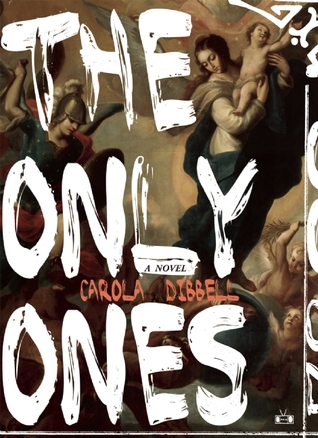
Carola Dibbell

Inez wanders a post-pandemic world, strangely immune to disease, making her living by volunteering as a test subject. She is hired to provide genetic material to a grief-stricken, affluent mother, who lost all four of her daughters within four short weeks. This experimental genetic work is policed by a hazy network of governmental ethics committees, and threatened by the Knights of Life, religious zealots who raze the rural farms where much of this experimentation is done. When the mother backs out at the last minute, Inez is left responsible for the product, which in this case is a baby girl, Ani. Inez must protect Ani, who is a scientific breakthrough, keeping her alive, dodging authorities and religious fanatics, and trying to provide Ani with the childhood that Inez never had, which means a stable home and an education.

With a stylish voice influenced by years of music writing, The Only Ones is a time-old story, tender and iconic, about how much we love our children, however they come, as well as a sly commentary on class, politics, and the complexities of reproductive technology.

God, did I get lost in Carola Dibbell's vision of dystopian New York City. Coupons replace cash; swipes and spit tests replace photo ID's; phone calls and messages are received on Boards (which are both personal devices and outdoor, ATM-like machines); and public transportation consists of bubble cars, unreliable wind-powered trams and boats, and hovering magnetized trains. Giant domes encapsulate wealthy neighborhoods as a feeble attempt to protect against the threat of death that lives in every breath. It's a stark and gritty world where babies are conceived in basement laboratories and sold as "viables" in the global underground market. 

The Only Ones was one of many post-pandemic novels I had itched to get my hands on. It hinges itself on more than just surviving the unsurvivable. It tackles more than just rebuilding society. Dibbell's novel sticks its hands into the evolutionary food chain and calls into question the roles of man and god. 

It's a story about understanding your worth and overcoming your "heritage". It's about embracing motherhood, even if you don't know what that is, and the near-obsessive desire to give your children a better childhood than you had. 


Can be applied against

  • We Are Hungry Men (David Bowie, 1967) - Read a book about a global catastrophe
  • After Today ( Young Americans, 1975)– Read a book that takes place in the future
  • Something in the Air (Hours, 1999) – Read a post-pandemic novel
  • Sunday (Heathen, 2002) – Read a book that is narrated by a survivor of some apocalypse


Can also be applied against

  • Janine (Space Oddity, 1969) – Read a book with a female protagonist
  • Kooks (Hunky Dory, 1971)– Read a book about parenthood or that revolves around parenting
  • No Control (1. Outside, 1995) – Read a book that someone recommended to you
  • Survive (Hours, 1999)– Read a book about survival or in which a character beat the odds
  • God Bless the Girl (The Next Day Extra, 2013) – Read a book written by a female author
  • So She (The Next Day Extra, 2013)– Read a book told from a female’s point of view
  • The Next Day (The Next Day, 2013) – Read a book that takes place in the near future


Edan Lepucki

The world Cal and Frida have always known is gone, and they've left the crumbling city of Los Angeles far behind them. They now live in a shack in the wilderness, working side-by-side to make their days tolerable despite the isolation and hardships they face. Consumed by fear of the future and mourning for a past they can't reclaim, they seek comfort and solace in one other. But the tentative existence they've built for themselves is thrown into doubt when Frida finds out she's pregnant. 

Terrified of the unknown but unsure of their ability to raise a child alone, Cal and Frida set out for the nearest settlement, a guarded and paranoid community with dark secrets. These people can offer them security, but Cal and Frida soon realize this community poses its own dangers. In this unfamiliar world, where everything and everyone can be perceived as a threat, the couple must quickly decide whom to trust.

A gripping and provocative debut novel by a stunning new talent, California imagines a frighteningly realistic near future, in which clashes between mankind's dark nature and irrepressible resilience force us to question how far we will go to protect the ones we love.

Edan has done something wonderful within a somewhat "been there, read that" genre. As a fan of post-apocalyptic and dystopian literature, I've experienced just about every end-of-the-world scenario. From meteors to zombies to plagues,.. and while there is nothing wrong with that, I have a deep appreciation for the slow, unobtrusive way in which Edan ushered in hers. How scary to imagine growing up in a world where, little by little, we are pushed back towards the dark ages. Internet and electricity are spotty at best, colleges teach its students to farm, people trade gold for the silliest trinkets.

Through California, Edan addresses our biggest fears as she offers its characters the opportunity to rebuild society, and right past wrongs. Will they continue down the dark path that brought about their own undoings or move humanity forward in new and unexpected ways?

For the record, had my husband and I been characters in this book, fleeing the same dying city, we'd be dead within a week of exposure to the elements, dehydration, and us stupidly gorging out on poisonous berries or some ridiculously dumb infection by hangnail. We're just not cut out for the end of the world as we know it. Do you think it's too late to influence my kids into becoming crunchy granolas? This novel makes me fear for their future.


Can be applied against

  • We Are Hungry Men (David Bowie, 1967) - Read a book about a global catastrophe
  • After Today ( Young Americans, 1975)– Read a book that takes place in the future

Can also be applied against

  • Janine (Space Oddity, 1969) – Read a book with a female protagonist
  • Kooks (Hunky Dory, 1971)– Read a book about parenthood or that revolves around parenting
  • Somebody Up There Likes Me (Young Americans, 1975) – Read a book that is written in third-person
  • The Secret Life of Arabia (Heroes, 1977)– Read a book in which the protagonist is keeping secrets
  • No Control (1. Outside, 1995) – Read a book that someone recommended to you
  • Algeria Touchshriek (1.Outside, 1995) – Read a book in which the title is the character’s name
  • Survive (Hours, 1999)– Read a book about survival or in which a character beat the odds
  • God Bless the Girl (The Next Day Extra, 2013) – Read a book written by a female author


Clayton Smith

Three years have passed since the Jamaicans caused the apocalypse, and things in post-Armageddon Chicago have settled into a new kind of normal. Unfortunately, that "normal" includes collapsing skyscrapers, bands of bloodthirsty maniacs, and a dwindling cache of survival supplies. After watching his family, friends, and most of the non-sadistic elements of society crumble around him, Patrick decides it's time to cross one last item off his bucket list. He's going to Disney World. This hilarious, heartfelt, gut-wrenching odyssey through post-apocalyptic America is a pilgrimage peppered with peril, as fellow survivors Patrick and Ben encounter a slew of odd characters, from zombie politicians and deranged survivalists to a milky-eyed oracle who doesn't have a lot of good news. Plus, it looks like Patrick may be hiding the real reason for their mission to the Magic Kingdom... 

A post-apocalyptic novel that makes fun of itself and every book or film that's ever come before it? Uh, yes please!

Clayton Smith knocks it out of the park - The Magic Kingdom's parking lot, to be exact - with this hilarious tale of two BFF's who've managed to survive the apocalypse (which was brought about by Jamaican 'Flying Monkey Missiles' if you can believe it) by apparent sheer dumb luck. Time and time again I found myself wishing I could hop inside Clayton's world and tag along with these guys.Sprinkled throughout with pop culture references and served with a heaping dose of well written dialogue, I'm naming APOCALYPTICON the must-read book of 2014 for fans of post-apoc literature. Give yourself a break from all the end-of-the-world doom and gloom, and get your read on with this insanely incredible post apocalyptical novel with a huge heart. And HELLO?! Have you seen the cover? If my review's not enough to make you pick this thing up.... that cover sure as hell should be! 


Can be applied against

  • We Are Hungry Men (David Bowie, 1967) - Read a book about a global catastrophe
  • Bombers (Hunky Dory, 1971) - Read a book about nuclear war or a book that features an apocalypse
  • After Today ( Young Americans, 1975)– Read a book that takes place in the future

Can also be applied against
  • We Are the Dead (Diamond Dogs, 1974) - Read a zombie novel
  • Somebody Up There Likes Me (Young Americans, 1975) – Read a book that is written in third-person
  • Across the Universe (Young Americans, 1975)– Read a book in which the main character has to travel a long distance
  • Never Let Me Down (Never Let Me Down, 1987) – Read a book in which a character places their faith in something
  • No Control (1. Outside, 1995) – Read a book that someone recommended to you
  • Survive (Hours, 1999)– Read a book about survival or in which a character beat the odds
  • The Pretty Things Are Going to Hell (Hours, 1999) – Read a dark comedy


Eric Shonkwiler

Years from now, America is slowly collapsing. Crops are drying up and oil is running out. People flee cities for the countryside, worsening the drought and opening the land to crime. Amid this decay and strife, war veteran David Parrish fights to keep his family and farm together. However, the murder of a local child opens old wounds, forcing him to confront his own nature on a hunt through dust storms and crumbling towns for the killer.

Shonkwiler's sparse prose moved patiently across the page, building tension as it went, as raw and cutting as the dust storms that plagued his characters in this "apocalyptic western" debut. Nothing I read in the following eleven months even came close. It's a bleak tale of the beginning of the end of the world. Of a family man who feels the weight of everyone's worries on his shoulders. Of this man who, regardless of consequence, is determined to make sure everyone is alright, even if it means hurting the ones he cares about most. It's a tale of survival as much as it is one of destruction. And Shonkwiler pulls it off effortlessly. It's a killer read. It does all of the things you want it to and some of the things you don't. And that's what makes it so powerful. That's what makes it THE one.


Can be applied against

  • We Are Hungry Men (David Bowie, 1967) - Read a book about a global catastrophe
  • After Today ( Young Americans, 1975)– Read a book that takes place in the future

Can also be applied against
  • Please Mr. Gravedigger (David Bowie, 1967)– Read a book about murder, or that prominently features a murder
  • Somebody Up There Likes Me (Young Americans, 1975) – Read a book that is written in third-person
  • No Control (1. Outside, 1995) – Read a book that someone recommended to you
  • Thru These Architect’s Eyes (1.Outside, 1995) – Read a book that uses punctuation oddly
  • The Next Day (The Next Day, 2013) – Read a book that takes place in the near future


If you like this post and would be interested in seeing more like this one, let me know!